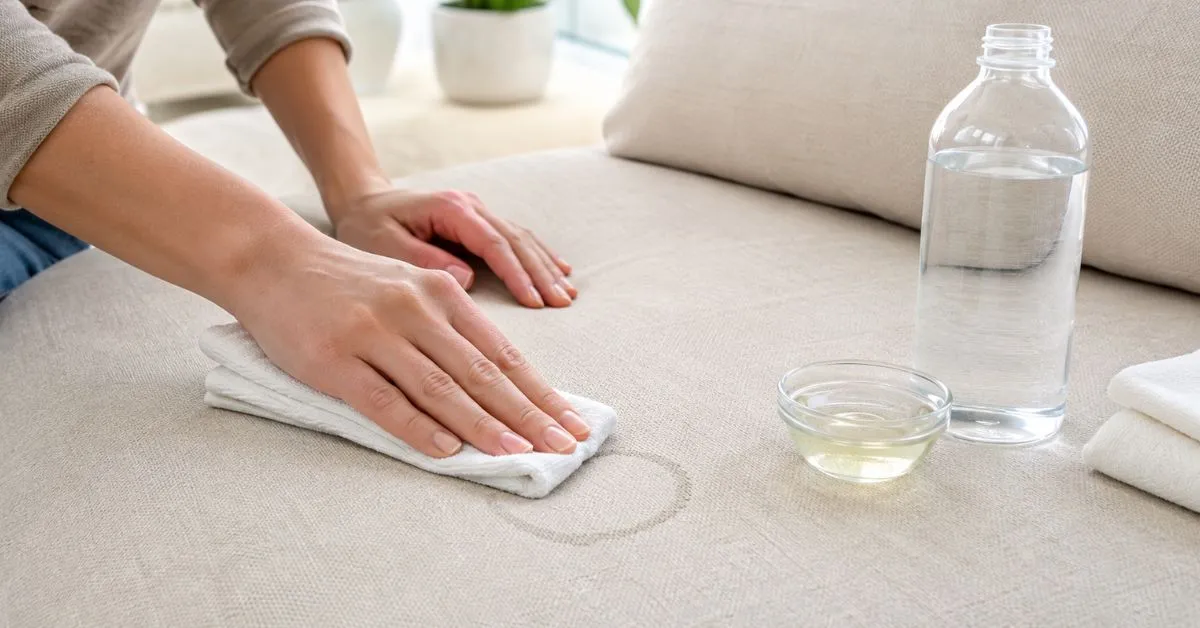

Water stains can be a pale imprint, dark ring, or a blotchy spot anywhere on fabric or materials. Even though the liquid may be clean, it still may carry and deposit minerals, dust, or dye along the borders of a water mark. To treat the spot, lightly rewet the fabric with distilled water, blot evenly, and let it dry. For stubborn blemishes, try using a solution of white distilled vinegar or detergent, depending on the fabric type.
Why Do Water Stains Occur On Fabric?
Stains left behind by water on fabric can be caused by minerals in the liquid or on the material. Apart from hard water, the reason for the spot on material can be:
- Soap or detergent buildup
- Embedded dust,
- Dye transferring or uneven fabric drying,
- Unusual or uneven drying of the wet spot,
- Oxygen impurities in rainwater, and
- Previously used cleansing products.
Water that has high calcium content tends to leave white or grey spots on textiles because of minerals in the fluid.
What You May Need
Prior to removing the water stain, gather all of the required supplies:
- Distilled water
- White color microfiber cloths
- Mild liquid detergent
- White distilled vinegar
- Spray bottle
- Soft bristle brush
- Towels, and
- Fan, if required
Note that colored cloths can leave dyes on the moisture mark, whereas white towels will not harm the fabric.
How to Get Water Stains Out Of Washable Fabric?
Most garments, washable tablecloths, and home furnishings offer washing instructions: either a machine wash or a hand wash. Always follow the washing instructions before spot cleaning any fabric with liquids. Delicate materials should only be treated by a specialist.
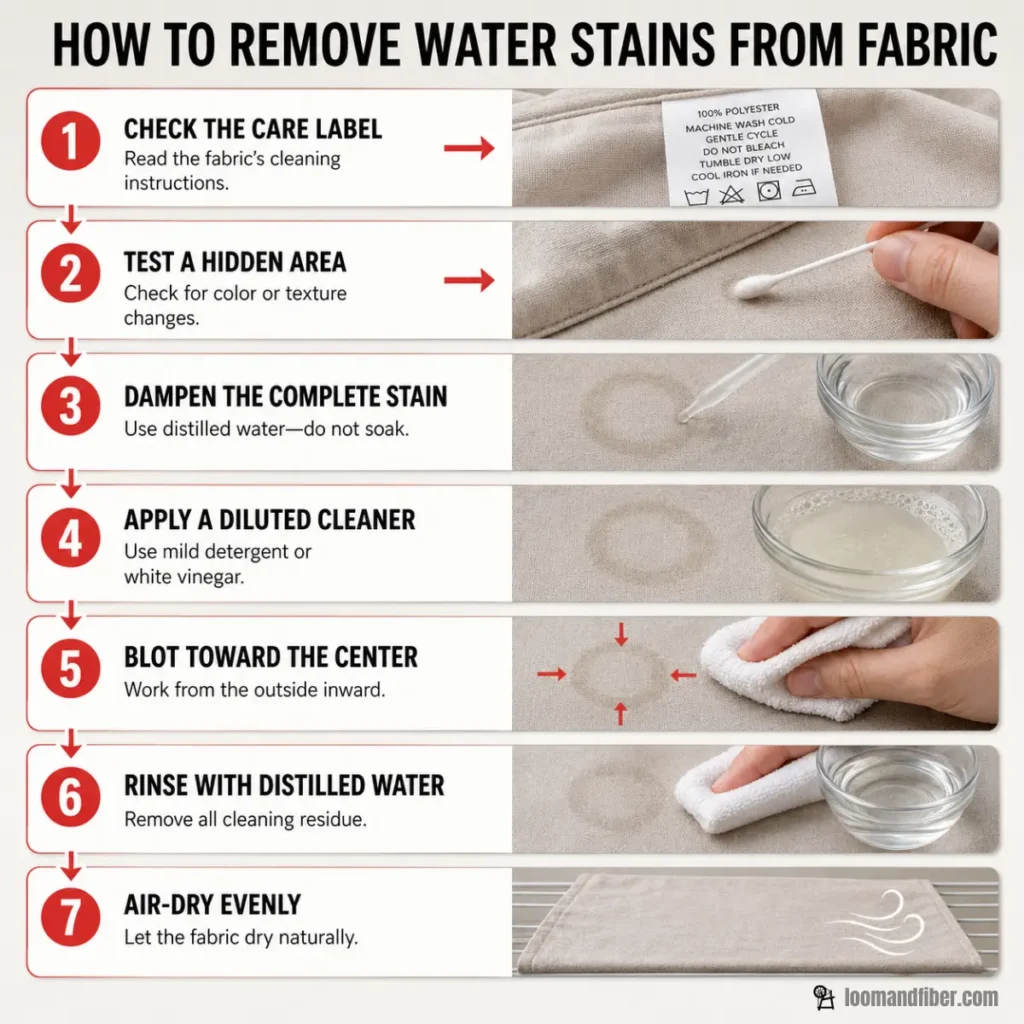
Check the Care Label
Before attempting to remove the water stain, check the fabric for care instructions. If the cloth is only suitable for dry cleaning, take it to a professional cleaner with care not to mark it further.
Rewet The Fabric With Distilled Water
Soak a clean piece of white cloth in warm distilled water and gently blot on the entire water spot, avoiding the middle of the mark. Never rewet only the stained spot because it might make it more prominent.
It is advisable to use a distilled solution instead of ordinary water to blot the fabric. This will reduce the risk of water spots since they have fewer minerals.
Apply A Mild Detergent Solution
It is advisable to use a mild liquid cleanser when removing water spots from clothes. Avoid products containing fragrance or dyes, which can make the spots on fabric turn into a bright or dark ring. Dilute a few drops of liquid detergent in a cup of warm distilled water and then spot-clean the mark.
Before applying a mild detergent solution, test it on a small area to ensure that it does not alter the fabric color. After that, rewet the entire water mark and blot with a clean dry White Cloth from the outside to ensure that the fluid is not spreading.
Rinse the Spot
Blot the water spot with another cloth soaked in warm distilled water to remove any traces of detergent. Continue blotting until no liquid comes out.
Wash And Air The Fabric
Wash the fabric according to the care instructions and let it dry. Always air-dry garments to prevent additional spots from forming, especially if using a hot dryer.
How do I Get Water Stains Out Using White Vinegar ?
Mild stains with hard water can also be removed from textile using white vinegar solution. A 1:3 ratio of white vinegar to warm distilled water is sufficient to remove most water spots from fabrics that do not require dry cleaning.
Mix:
- One part white vinegar
- Three parts distilled water
Before applying the solution, it is advisable to test it on a small area of the fabric. Using a White Cloth, gently dab the mixture on the water spot. Wait about 5 minutes and then blot with a piece of white cloth soaked in plain warm water. The liquid will evaporate on its own at a uniform rate.
Avoid using white vinegar in combination with chlorine bleach as the two can combine to form a poisonous gas.
How To Remove Water Stains From Upholstery?
Removing water stains from upholstered furniture such as a couch, a chair, and a bed headboard involves blotting on the affected area. Using excessive moisture while cleaning can cause an unsightly, musty odor or even mold and mildew to occur. To remove the spot, first, vacuum the upholstery surface to remove minute dust particles that could affect the next steps. Rewet the total area of the upholstery panel with distilled water and blot it gently with a piece of white cloth.
If the mark still persists after blotting with clean water, dilute a teaspoon of mild hand washing liquid in two cups of distilled warm water to form a cleaning solution. Using a piece of white cloth, gently blot the water spot with minimal moisture. Do not saturate the fabric with the cleansing liquid but blot the area instead. Use another piece of white cloth soaked in plain water to remove residue from the area.
Finally, place a dry towel on the upholstery panel and press gently to blot away excess moisture. Always allow the upholstery to air dry without using a hot blow dryer. Do not sit on the furniture until the fabric is entirely dry.
How To Get Water Stains Out Of Fabric On Sofas?
To determine how to get water stains out of fabric on soaps, the preferred method depends on the washing instructions provided.
| Code | Meaning |
|---|---|
| W | Water-based cleaner is usually suitable |
| S | Use a solvent-based cleaner |
| W/S | Either water- or solvent-based products may be used |
| X | Vacuum only or arrange professional cleaning |
A water-based spot treatment should not be used for fabric with code S or X since it might lead to an enlarged water spot.
How to Remove Old Water Stains?
Old mineral water stains have tough deposits and might stick firmly into the fabric. Begin by using a vacuum cleaner on the material to remove minerals, or use a soft bristle brush. Rewet the entire mark with warm distilled water and wait for a couple minutes. Then blot the liquid spot with a mild solution of water and white vinegar.
If the water spot still persists, repeat the procedure but avoid saturating the fabric until it is dry. Wash the spots away following the washing instructions.
In case of an old water stain, it may require up to 3 repetitions of blotting and drying procedures to totally remove the mark. Avoid using too much pressure when blotting as it can distort the fabric instead of removing the spots.
Remove Water Marks From Different Fabrics
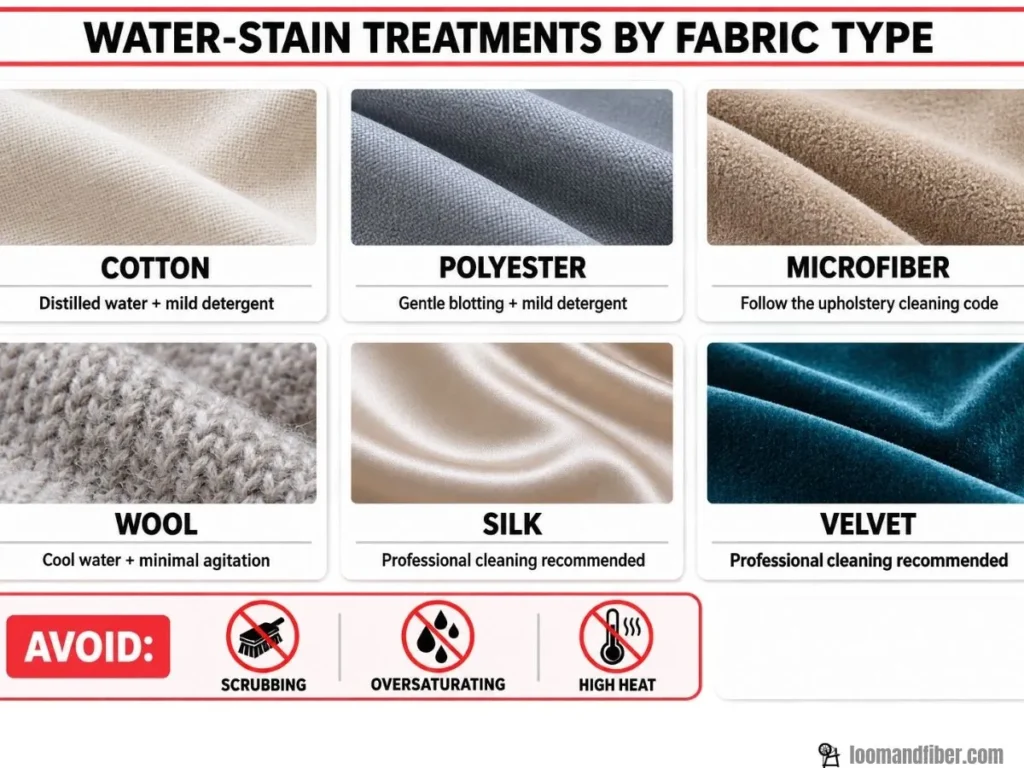
Cotton And Linen: These two are likely to react well to distilled water and detergent. Simply wipe off the residue with water, wash the item afterward if permitted.. However, linen has wrinkling or shrinking tendencies, and should not be exposed to hot water.
Polyester: This common fabric is resistant to water, but blotting with distilled water and detergent should suffice.
Microfiber: Refer to upholstery code, and consider water or rubbing alcohol solution or solvent-based cleaner.
Velvet: Water can crush the delicate velvet fibers resulting in an apparent bump on the surface. This issue may persist even after blotting at home, and professional cleaning is always the safest bet.
Silk: It is unsafe to use water on this silk fine fiber since it tends to result in unattractive dry ring, water mark, or loss of luster. A reputable cleaner should be relied on for dry cleaning.
Wool: Like silk, wool has poor resistance to water. It can shrink, felt, and lose its shape upon exposure to water. Where the care guide indicates that home cleaning is advisable, use cold water and avoid agitating it.
Avoiding Common Mistakes in Eliminating Water Stains
The following are common mistakes when the person is trying to remove water stains from upholstered furniture:
- Rubbing the stain
- Drenching the upholstery padding
- Using hard water
- Applying undiluted vinegar
- Disregarding the care label
- Using colored clothes
- Removing moisture by drying
- Combining various chemical treatments
- Working on the center of the water ring only
- Bleaching the stain
The blotting technique is preferred because it does not cause the fibers to entangle. Simply put, rubbing a liquid stain can push it further into the fabric. Instead, it should be blotted with a clean white cloth, paper, or towel.
Avoiding Stains Formation
Moisture on fabric should be removed immediately by blotting heavily with an absorbent towel.
This is especially true with delicate fibers that cannot withstand prolonged exposure to moisture. When attempting to spot clean the surface, it is important to use distilled water that is not highly mineralized. A little quantity goes a long way, and any remaining traces of detergent should be rinsed off after blotting. Ideally, the cleaned surface should be dried rapidly in a well-ventilated area.
Upholstery fabric protector will also help to prevent water stain. However, prior testing should be done to ensure that it is compatible with the upholstery type.
Read More>> How to Clean Boucle Fabric?
Knowing When to Call a Professional Cleaner
It is advisable to call a professional cleaner in the following scenarios:
- When the care label indicates ‘dry-clean only’
- When the fabric is made of silk, wool, rayon, or velvet fiber
- If there is an ‘S’ or ‘X’ cleaning code for the upholstery
- In case the ring covers considerable area on the fabric
- Where the cleaning cloth is stained by the fabric dye.
- When the fabric has developed mold or a musty odor
- Even if the stain has resisted multiple cleaning efforts at home
- If the item is of sentimental value, rare, or vintage
Conclusion-
The best approach to removing a water trace is to dab it with a clean white towel dipped in distilled water. It may then be rinsed off by blotting with another towel until the moisture has been removed. On the other hand, a mild detergent can be added for spot removal of any impurity that may have adhered to the fabric.
For tough deposits that are resistant to several cleaning methods, a diluted solution of white vinegar can be used. First of all, it is important to test how a certain fabric reacts to the mixture before using it on the entire surface. It dissolves the calcium mineral deposits found in hard water.
Read More>> How to get Hot Glue off Fabric?
FAQs
Most often, they are not, and blotting with a clean, distilled water will usually eliminate fresh water rings caused by minerals, detergents or uneven drying. Can you use vinegar to remove water stains from fabric? Diluted white vinegar can be used to remove certain water spots from fabrics but first test it on a small area as it can damage delicate fabrics and dyes.
Leftover dirt, minerals or residue from the cleaning solution may make the spot reappear. Water ring on upholstery happens because of excess moisture in the fabric which attracts and holds any residue from cleaning products or other substances and it is left on the surface after the fabric is dried.
Using a hair dryer may actually cause more harm than good due to uneven drying and excessive heat. The best way to dry fabric with water stain is to place it in a well-ventilated room with a fan blowing air to speed up the drying process.