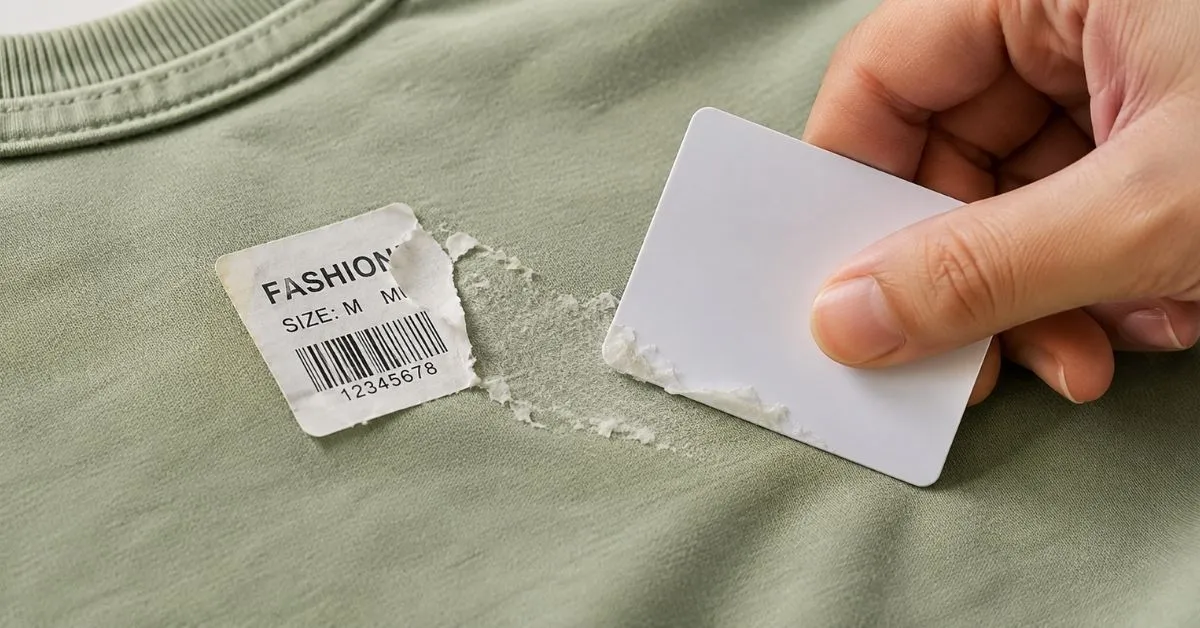

Sticker residue can typically be removed from the fabric by first lifting the bulk of glue, then treating the sticky residue with liquid laundry detergent, rubbing alcohol, or a combination of dish soap and oil. The right technique depends on the fabric, as well as the adhesive. Always spot-test a method on a discreet seam, and never dry-heat the garment in dryer before sticker residue is completely gone. Because it can set the adhesive and make it much harder to remove.
What You Will Need
Depending on a fabric type, and the level of adherence, you may need any of the following:
- A spoon, dull knife, or a plastic card
- Ice cubes or a freezer
- Liquid laundry detergent
- Dishwashing liquid
- Isopropyl alcohol
- Cotton pads, or a clean white cloth
- Cooking oil or mineral oil
- A soft toothbrush
- Warm or cool water
You will not necessarily need all the tools. It is best to start with a gentler method, and move on to stronger ones if nothing worked. Note that some methods leave marks on the fabric, and should be used in cases when the garment can tolerate them.
Before Removing the Sticker Residue
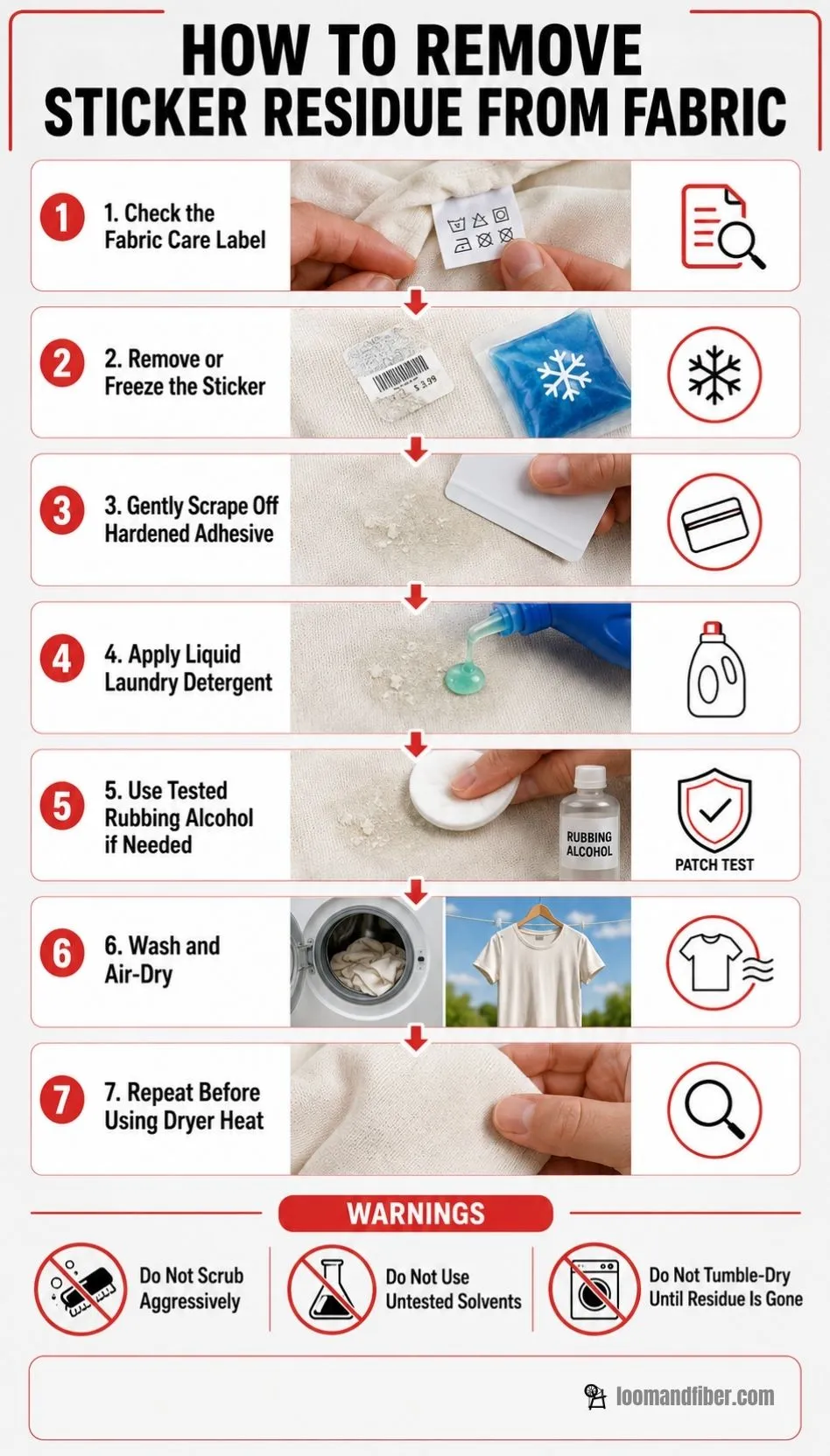
Before attempting to remove sticker residue from fabric, check the garment’s care label to see if water, alcohol, or other treatments are safe to use. For silk, wool, velvet, acetate, and dry-clean only garments, proceed with caution.
If there is a piece of the sticker left on the fabric, gently lift its edges. Do not try to remove a large piece with force, as it may stretch knitwear, or push glue deeper into the fibers. Place a clean white towel over the area to prevent residue from coming off on other parts of the garment.
Method 1: Freeze and Scrape the Sticker Residue
One of the safest ways to deal with sticker residue is to make it brittle. Freezing is an easy way to accomplish this with soft adhesives.
How to do it:
- Place the garment in a plastic bag, with the stained area facing up
- Put it in a freezer for 30-60 min
- Remove the garment, and lift the frozen mass with a spoon, a plastic card, or a dull knife
- Work from the edges toward the center of the stain
- Treat the spot with liquid laundry detergent if there is still a sticky mark
- Wash the garment as instructed on the care label
Alternatively, you can use an ice pack, rather than freezing the whole garment. Simply place it on the sticker for a few minutes, until the glue becomes brittle. This method is best for thick, rubbery adhesive.
Method 2: Remove Sticker Residue With Laundry Detergent
Most washable cotton, polyester, denim, and blended garments can be safely treated with liquid laundry detergent.
How to do it:
- Lift the dry glue as much as possible
- Apply a small amount of liquid laundry detergent to the spot
- Work it into the fibers with your fingers or a soft toothbrush
- Let it sit for 10-15 minutes
- Rinse the garment in warm water, as instructed on the care label
- Proceed to wash it in a washing machine
- Let the garment air-dry, and check the spot
Laundry detergent is a mild but effective cleaner that lifts the glue away from the fibers leaving no residue.
Method 3: Remove Stubborn Adhesive With Rubbing Alcohol
Isopropyl alcohol can be used to dissolve pressure-sensitive adhesives that glue most kinds of stickers and price tags. Never use it on garments made of acetate, triacetate, modacrylic, delicate silks, or with unstable dyes.
How to do it:
- Test a few drops of rubbing alcohol on a hidden seam to make sure the dye does not run
- If there is no dye transfer, place the stained area on a clean towel, face down
- Use a cotton pad to dab the back of the adhesive spot
- Let it work for 1 or 2 minutes
- Lift the softened glue with a plastic card
- Treat the spot with liquid laundry detergent
- Rinse and wash the garment as instructed
Do not use alcohol without professional guidance on acetate, triacetate, modacrylic, delicate silk, or fabrics with unstable dyes.
Method 4: Use Dish Soap and Oil
Oil can loosen adhesive that does not respond to detergent or alcohol. However, this method can leave a grease stain, so it is best suited to washable fabrics.
How to do it:
- Apply a few drops of cooking oil or mineral oil on the spot
- Work the oil into the glue with a plastic card
- Let it sit for 5 min
- Lift the softened adhesive with a knife or a spoon
- Apply a few drops of grease-cutter dishwashing liquid directly to the spot
- Massage it into the fibers
- Let it sit for 10 min
- Rinse the garment of oil, and wash it as instructed
- Air-dry it and check the spot
Only use this method on washable fabric. Avoid using it on silk, suede, leather, velvet, or dry-clean only garments.
How to Remove Sticker Residue From Fabric After Washing
Sticker residue might become more prominent after washing due to water damaging paper, while leaving glue intact. Small paper spots may have come off with the wash, but the residue could still be visible as a dark mark.
How to do it:
Let the garment dry, and use the methods above to remove the glue. If the spot is still there, try freezing the garment, or spot-treating it with ice
Once the glue is gone, treat the residual mark with liquid laundry detergent
If it does not come off, try using rubbing alcohol
Again, spot-treat the garment before attempting to wash it. Repeat these steps a few times if needed.
How to Remove Sticker Residue After the Dryer
The heat from the dryer can melt the adhesive, making it stick to the fabric more firmly. Residue spots can accumulate lint, which makes them look like dark or grey stains.
How to do it:
- Put the spot on a clean towel, and treat it with rubbing alcohol
- Test a few drops on a hidden part of the garment first
- Dab the alcohol until the glue starts to come off
- Lift the softened adhesive with a plastic card
- Treat the spot with liquid laundry detergent
- Let it sit for 15 min
- Wash the garment as instructed
- Air-dry it and repeat if needed
Never put the garment in the dryer again until the spot is gone.
Treatment Guide for Different Fabrics
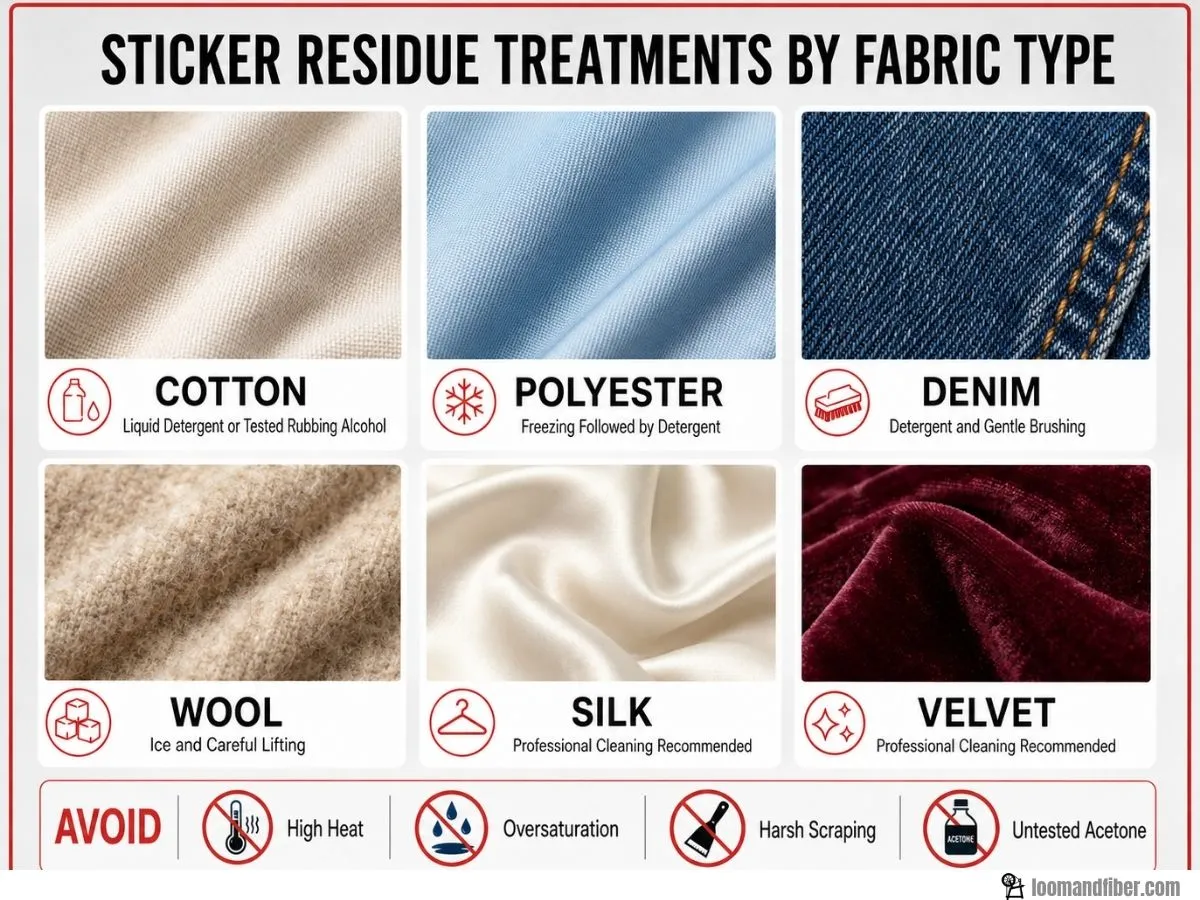
| Fabric | Recommended starting method | Important precaution |
|---|---|---|
| Cotton | Detergent or rubbing alcohol | Test dark and printed cotton for color loss |
| Polyester | Freezing followed by detergent | Avoid excessive heat |
| Denim | Detergent, then tested rubbing alcohol | Avoid hard scrubbing on faded finishes |
| Nylon | Mild detergent | Test solvents because finishes may react |
| Wool | Ice and careful lifting | Avoid heat, agitation, and soaking |
| Silk | Professional cleaning | Water and solvents may leave marks |
| Velvet | Professional cleaning | Pressure can crush the pile |
| Acetate | Mild detergent or professional cleaning | Avoid acetone and untested solvents |
| Upholstery | Follow the cleaning-code label | Avoid oversaturating the padding |
Can Vinegar Remove Sticker Residue?
White vinegar diluted with water may help to loosen some types of water-based glue, but it is generally less effective than laundry detergent and tested rubbing alcohol. It works best on light stains that do not leave a greasy trace.
How to do it:
- Mix equal parts of water and white vinegar
- Dab the fabric with the solution to loosen the stain
- Rinse the garment afterwards, and wash it as instructed
- Never mix vinegar with chlorine bleach
Can Acetone Remove Sticker Adhesive?
Acetone is a powerful solvent, but it is generally unsafe to use on clothing. It can strip color from fabrics, ruin printed designs, and dissolve some plastics and fibers, such as acetate.
How to do it:
Never use acetone on garments made of acetate, triacetate, modacrylic, delicate silks, or with unstable dyes. Only use it if the care label indicates that the garment can withstand it. Acetone is generally too harsh to use on clothing, and other methods are safer and more accessible.
Common Mistakes to Avoid
Things to avoid when trying to remove sticker residue from fabric:
- Putting the garment in the dryer before ensuring that the stain is completely gone
- Scrubbing the spot and spreading glue around
- Using a sharp knife to lift the glue and cutting the fibers
- Applying a solvent without checking if it affects the fabric’s dye
- Dropping a lot of oil on the fabric
- Mixing different cleaning solutions together
- Using hot water on delicate or heat-sensitive fabrics
- Trying to dry-clean a garment at home, when the care label says to take it to a professional cleaner
Conclusion-
The most reliable technique for removing sticker residue from fabric is to work gradually. Try to freeze and scrape away as much of the excess glue as possible, then try laundry detergent. Only use tested rubbing alcohol to treat any remaining adhesive residue. An oil-and-dish-soap remedy may help with especially persistent adhesive on washable garments.
Do not use the dryer on any clothing until it has been completely cleaned of foreign matter. By exercising caution, testing methods on a sensitive area of the garment first, and treating the glue with gradually less aggressive techniques, almost any garment should be able to withstand the ordeal.
Read More>> How to Remove water Stains from Fabric?
FAQs
Liquid laundry detergent is a good first remedy for most washable fabrics. Tested rubbing alcohol tends to be more successful on particularly persistent or residual stickers.
Rubbing alcohol can ruin some colorfast cotton and polyester garments by attacking dyes, finishes, prints, and sensitive fibers, so test it on an inside seam first.
The best method begins with freezing and gently scraping off the hardened adhesive. After that, launder the garment in liquid laundry detergent. If those less aggressive methods fail completely, try rubbing alcohol.
Heat can melt and spread the adhesive into the fabric, attracting lint like a magnet. Always try to air dry a treated garment so that you can see any complications that arise.
Yes, most silk, velvet, or heavily decorated clothing, as well as garments with unusual construction and those that require dry cleaning, should always go to the cleaners. Make sure to tell them what caused the stain and what methods, if any, you have tried already.