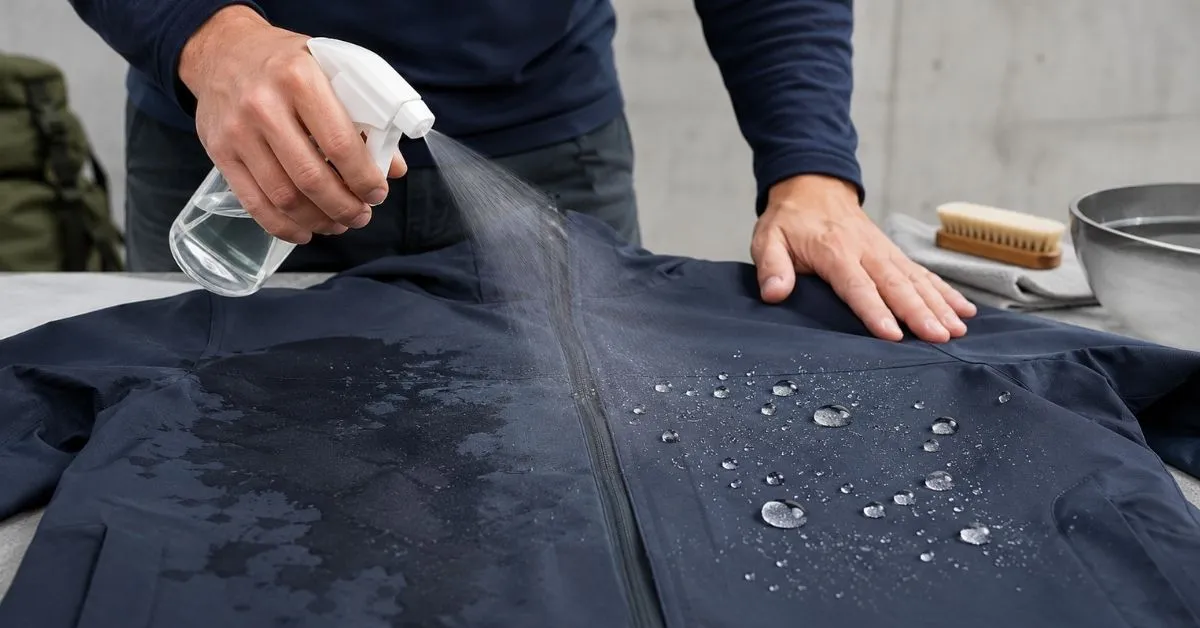

Waterproofing fabric refers to a process of protecting it from water penetration. The most suitable technique mostly depends on the fabric type, the conditions of use, and the level of water protection needed. Waterproofing sprays are great for clothing and upholstery, whereas wax or seam sealers offer a reliable protection for canvas, bags, and tents.
It is vital to understand that most home waterproofing treatments are designed to make the fabric water-resistant, not waterproof. Water-resistant fabric repels water, whereas waterproof fabric is impervious to it.
What Is the Difference Between Waterproof and Water-Resistant Fabric?
Waterproof fabric is made with a water-repelling coating, laminate, or special weaving to prevent water absorption. Water-resistant fabric is resistant to water penetration but is not impervious to it.
The main protection levels are:
- Water-repellent: water forms beads and runs off the fabric.
- Water-resistant: resists light rain for a short time.
- Waterproof: resists heavy prolonged rain.
A fabric-waterproofing product can make the fabric more water-repellent, but it may not protect against getting wet through a seam, a zipper, a patch, or torn fabric.
What Do You Need to Waterproof Fabric?
Depending on what material you want to treat, prepare the following supplies:
- Fabric-safe waterproofing spray
- A soft brush or a lint-free cloth
- Mild liquid detergent
- Water
- Gloves
- A drop cloth or newspaper
- A seam sealer (optional)
- A fabric wax (for canvas or heavy cotton)
- A hair dryer or an iron (some products require heat to activate)
- Before using any product, read its manufacturer’s instructions.
How to Waterproof Fabric With a Spray
Spray waterproofing products are the easiest to use: just spray and let the fabric dry. They are suitable for waterproofing jackets, shoes, cushions, backpacks, tents, and outdoor upholstery.
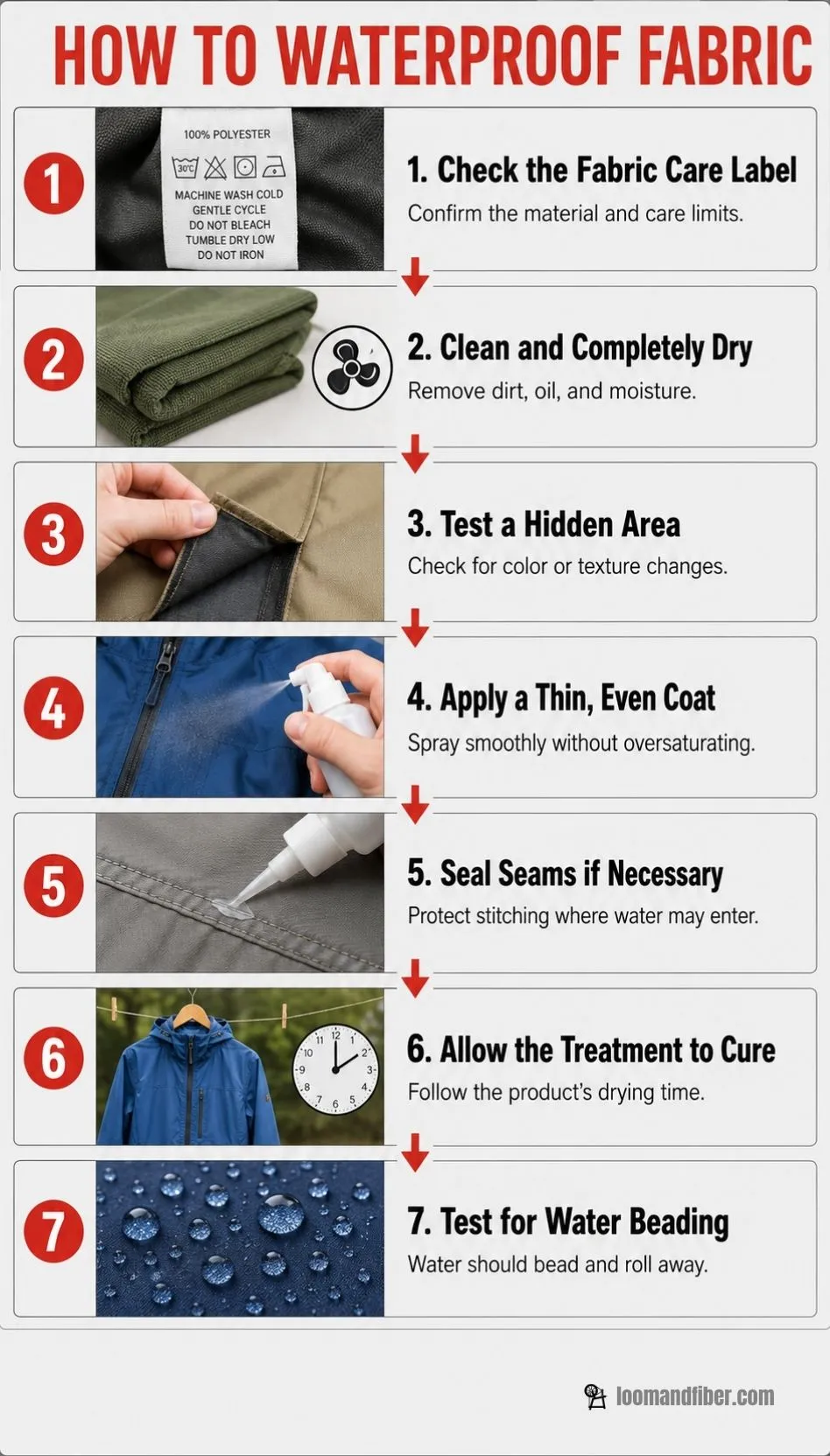
How to prepare fabric before using a waterproofing spray?
Remove any dirt, oil, dust, or old waterproofing product. Wash the fabric if necessary or spot-treat with a damp lint-free cloth. The new waterproofing product may not adhere to a dirty surface. Let the fabric dry, unless otherwise stated by the manufacturer.
Test a small piece of the fabric for colorfastness
Wet a small spot with the waterproofing product and wait for it to dry. Make sure that the treated spot is not discolored, stiff, or rough. This is an essential step for light-colored, printed, or delicate fabrics.
Make sure the working area is well-ventilated
Do not allow children and pets to touch the product. Keep the product away from open flames. Lay out newspapers or a drop cloth on the floor to protect it from any overspray.
Apply an even coat with a waterproofing spray.
Hold the can 15-20 cm from the fabric and spray in smooth strokes. Cover the entire surface of the fabric, but avoid oversaturation. A thick coat will leave the fabric stiff and patchy.
Let the fabric dry
The required drying time is specified by the manufacturer. It may take several hours or a day for the fabric to completely dry. Some products require a tumble dryer, a hair dryer, or an iron to set the waterproofing finish.
Apply a second coat if necessary.
The fabric may need two or more coats for a complete waterproofing protection, especially if it is used outdoors. Make sure the first coat is dry before applying the next one.
How to Waterproof Fabric With Wax
Wax is an easy way to waterproof canvas, cotton bags, work aprons, and some jackets. It makes fabric stiffer and darker and leaves it with a noticeable texture.
How to prepare fabric before using wax?
- Clean and dry the fabric.
- Warm the wax.
- Apply an even coat of wax over the entire surface of the fabric.
- Apply more wax to the corners and areas subject to wear.
- Remove excess wax with a lint-free cloth.
- Use a hair dryer to accelerate the curing process.
Let the fabric cure for the time specified by the manufacturer. Avoid using wax on stretch fabrics, silk, velvet, and any other delicate material. Never apply wax to a hot fabric.
How to Waterproof Fabric With a Wash-In Treatment
Wash-in waterproofers are typically used to waterproof technical jackets, rainwear, or outdoor clothing. They provide a fabric with a water-repellent finish that protects the whole garment, including the seams.
Before using the product, make sure the fabric is clean and dry. Wash the washing machine’s dispenser, as any residue left from regular detergent may affect the waterproofing performance of the fabric. Add the recommended amount of waterproofer to the washing machine and choose the cycle specified by the manufacturer when washing the garment. Some products need a tumble dryer to activate their waterproofing properties. Always follow the care label of the garment being treated.
Do I Need to Seal the Seams for a Waterproof Fabric?
The waterproof properties of any fabric are generally limited to its coating, laminate, or wax. The stitching on the seams may allow water to penetrate the fabric. A seam sealer is applied with a paintbrush directly on the seams to fill the holes. It is especially important for tents, rain covers, bags, and waterproof clothing. Make sure the seams are clean and dry before sealing. Always use a sealer suitable for the fabric’s waterproofing finish. For instance, silicone-coated and polyurethane-coated materials need a different sealer.
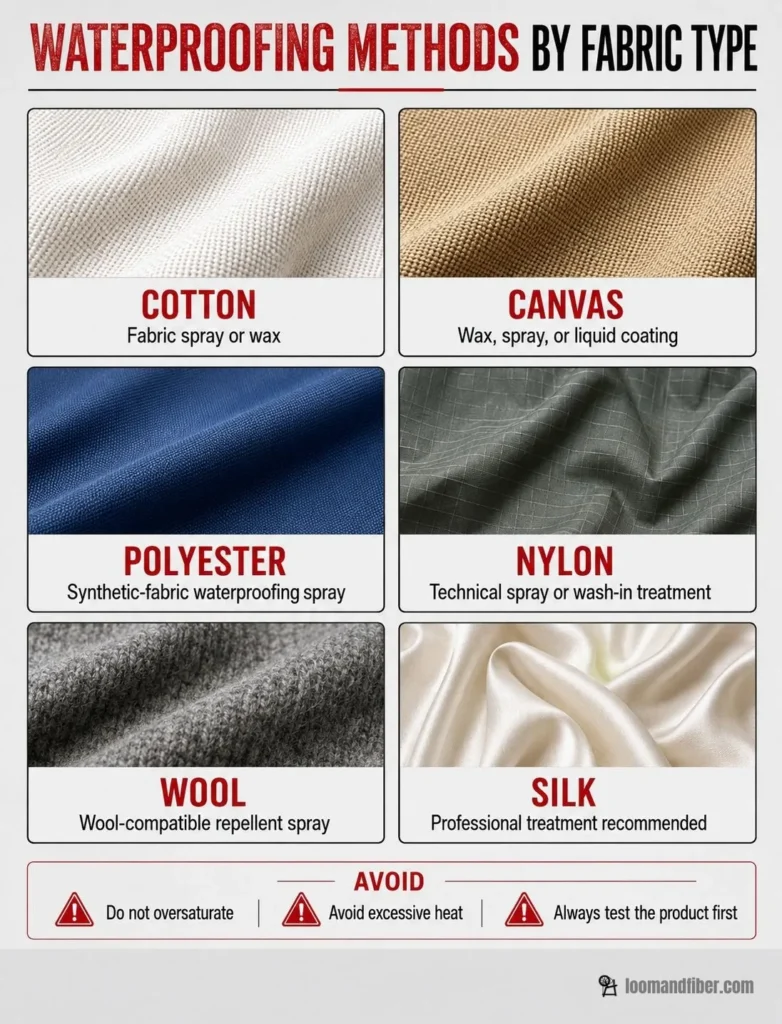
Waterproofing Methods by Fabric Type
| Fabric | Suitable starting method | Important precaution |
|---|---|---|
| Cotton | Waterproofing spray or wax | Treatment may darken the fabric |
| Canvas | Wax, spray, or liquid coating | Apply evenly to prevent patchiness |
| Polyester | Synthetic-fabric waterproofing spray | Avoid excessive heat |
| Nylon | Technical spray or wash-in treatment | Check for an existing coating |
| Outdoor upholstery | UV-resistant waterproofing spray | Test for color changes |
| Wool | Wool-compatible water-repellent spray | Avoid oversaturation and high heat |
| Silk | Professional treatment | Home products may cause staining |
| Velvet | Professional treatment | Moisture can affect the pile |
| Leather | Leather-specific protector | Do not use standard fabric spray |
Can I Use Silicone to Waterproof Fabric?
Silicone products can be used to waterproof tents, tarps, canvas, and other outdoor equipment. They generally provide a better protection than spray treatments. However, they may affect the color, texture, breathability, and subsequent treatments of the fabric. Make sure to use a commercial silicone product designed for the specific type of fabric. Avoid using home-made solvent-based silicone: it may permanently damage the fabric.
Common Waterproofing Mistakes
Do not waterproof the fabric if it is dirty: Oil and dirt on the fabric will prevent the new waterproofing product from curing properly. Always clean the fabric before treating it.
Do not saturate the fabric: More product does not mean a better protection; oversaturation may leave unsightly spots on the fabric. Always follow the manufacturer’s instructions.
Skipping the seams: The stitching on the seams is often the weakest point and may allow water to penetrate. Make sure to treat the seams if the product’s instructions ask you to do so.
Always choose the waterproofing product suitable for the fabric you want to treat: A product designed for canvas may permanently damage silk, stretch, leather, or waterproof fabric.
Do not use excessive heat on the fabric: High temperatures may shrink natural fibers, melt plastic, ruin the waterproofing coating, and destroy glue on zippers and patches. Always follow the care label of the fabric being treated.
Do not expect permanent results: Most products require regular maintenance and annual re-proofing to extend the fabric’s water-repelling properties.
How to Test a Waterproof Finish?
Once the waterproofing product has cured, test the fabric’s water-repelling properties by getting a few drops of water. On a properly treated surface, water should not penetrate the fabric but form beads instead.
When testing an outdoor product, use a light spray of water to make sure that no moisture will get through the fabric. Do not expose the item to heavy rain before its waterproofing product has cured.
How Long Does the Fabric Waterproofing Last?
The duration of the fabric waterproofing depends on the product used, the type of the fabric, and the conditions of its use. A waterproofing product may last for years on an indoor cushion and only a few weeks on an outdoor chair. Treat the fabric again when water stops forming beads and begins to soak through.
Conclusion-
Fabric waterproofing is a task of selecting a suitable waterproofing product. Waterproofing sprays are ideal for clothing and upholstery: they are easy to use and suitable for most synthetic materials. Wax provides a durable waterproofing protection but may darken the fabric and affect its texture. Seam sealers are used to fill the holes in the seams created during the sewing process. Wash-in finishings are suitable for technical clothing, providing it with a water-repellent and breathable waterproofing film. No matter what product you choose, make sure to clean the fabric before treating it, test it on a small piece of fabric, apply thin and even coats, and allow sufficient curing time.
Read More>> Can you use Acrylic Paint as Fabric Pain?
FAQs
Most kinds of fabric can be made more water-resistant, but delicate materials such as silk or velvet should be professionally treated. The waterproofing result also depends on the fabric’s weave and existing finish.
Most waterproofing treatments are made to last for years, but they are never permanent. The fabric may lose its water-repelling properties over time due to washing, exposure to UV light, abrasion, and regular wear. Always store waterproofed items away from direct sunlight and excessive moisture.
Some products may darken the fabric and leave spots, so it is vital to test the product on a small piece of fabric first.
Yes, you can treat cushions for outdoor use with a fabric waterproofing spray. Make sure to choose a product that is safe for outdoor use and UV-resistant. Treat all surfaces of the cushions and allow them to dry before using the furniture.
A heavy waterproofing coat or wax may decrease the breathability of the fabric. It is better to choose a breathable waterproofing product if you want to keep the fabric’s original breathing capacity.
Washing the waterproofed fabric is possible, but it depends on the product used. Hot water, fabric softener, or harsh detergents may affect the fabric’s waterproofing properties.