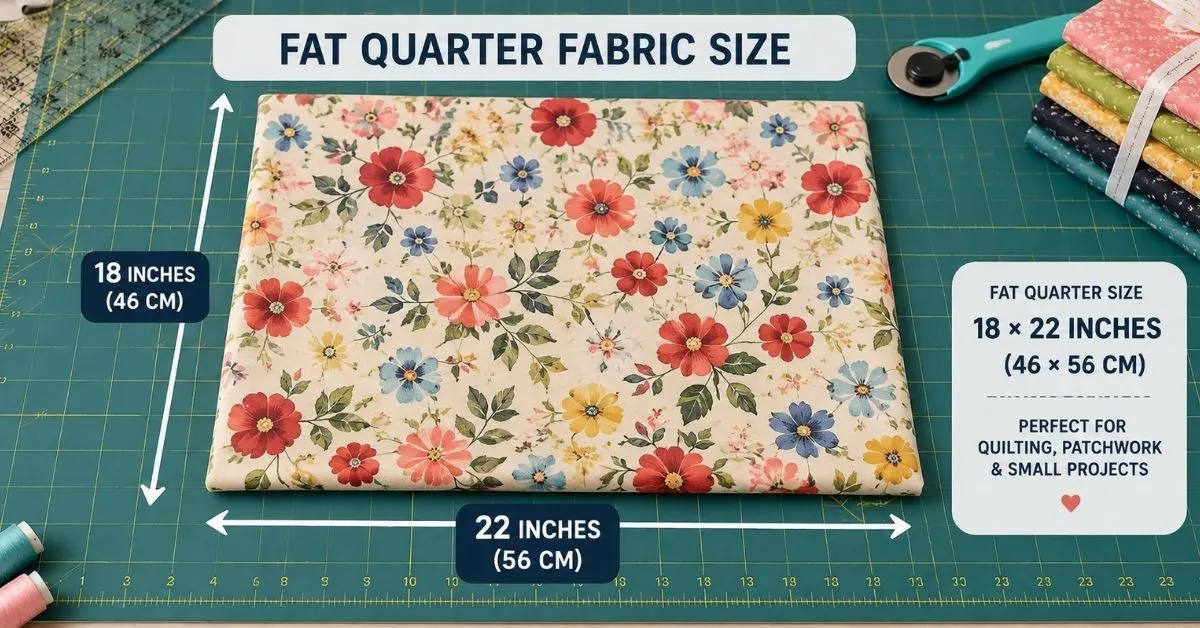

A fat quarter is 18 inches wide by 22 inches long or about 46 × 56 cm. It is 1/4 of a yard, but cut into wider and lower proportions than a standard quarter yard. Fat quarter fabric is approximately 2 times bigger than a standard quarter size in quilting.
A fat quarter is more suited for quilts, patchwork, applique, small sewing projects and larger fabric cuttings.
What Is a Fat Quarter of Fabric?
A fat quarter is a rectangle of fabric, which is formed by cutting a yard of fabric into 4 equal parts. It is not cut into 4 strips across the width of the yard, but across the length of the yard first. It is then further cut into the resulting halves, to produce 4 fat quarters.
Most quilting cottons are sold on a bolt, which is 44 inches wide. One yard of fabric on a bolt would measure 36 × 44 inches. Cutting this yard in 2 halves across the length would result in 2 pieces measuring 18 × 44 inches each. Further cutting these pieces in half across the width produces 4 rectangles, which measure roughly 18 × 22 inches.
The name fat quarter refers to the wider proportions of the resulting fabric pieces. This does not mean that a fat quarter has more fabric than a standard quarter. It rather provides more options in cutting a quilt pattern.
What Are the Standard Fat Quarter Dimensions?
The standard dimensions of a fat quarter in US measurements are:
- 18 inches wide by 22 inches long
- Approximately 46 cm by 56 cm
- 396 square inches in total area
- 1/4 of a linear yard of fabric
However, the dimensions can vary slightly depending on the fabric manufacturer, precutter or quilting shop. The usable area of a fat quarter can also vary after removing the selvages or washing the fabric.
It is therefore always important to measure a fat quarter for a specific project. Also allow for the wastage due to seam allowances, matching up patterns and squaring up the edges.
How Is a Fat Quarter Cut?
A fat quarter of fabric is measured in a yard. One yard is 36 inches long and approximately 44 inches wide. The fabric seller will cut the yard into 2 halves across length, which produces 2 pieces measuring 18 × 44 inches each. Then each half yard is cut in 2 across the width of the fabric, resulting in 4 pieces of fabric, which measure approximately 18 × 22 inches each.
This allows cutting a variety of shapes, strips and squares from a fat quarter. One cannot cut an 18-inch square from a regular 9-inch wide quarter.
If the original fabric bolt is more or less than 44 inches wide, the resulting fat quarter will also be more or less than 18 × 22 inches. The 18-inch side of a fat quarter is usually fixed. Whereas the other side will depend on the width of the fabric.
Fat Quarter vs Quarter Yard: What Is the Difference?
A fat quarter and a regular quarter-yard of fabric contain roughly the same amount of fabric, but in different dimensions.
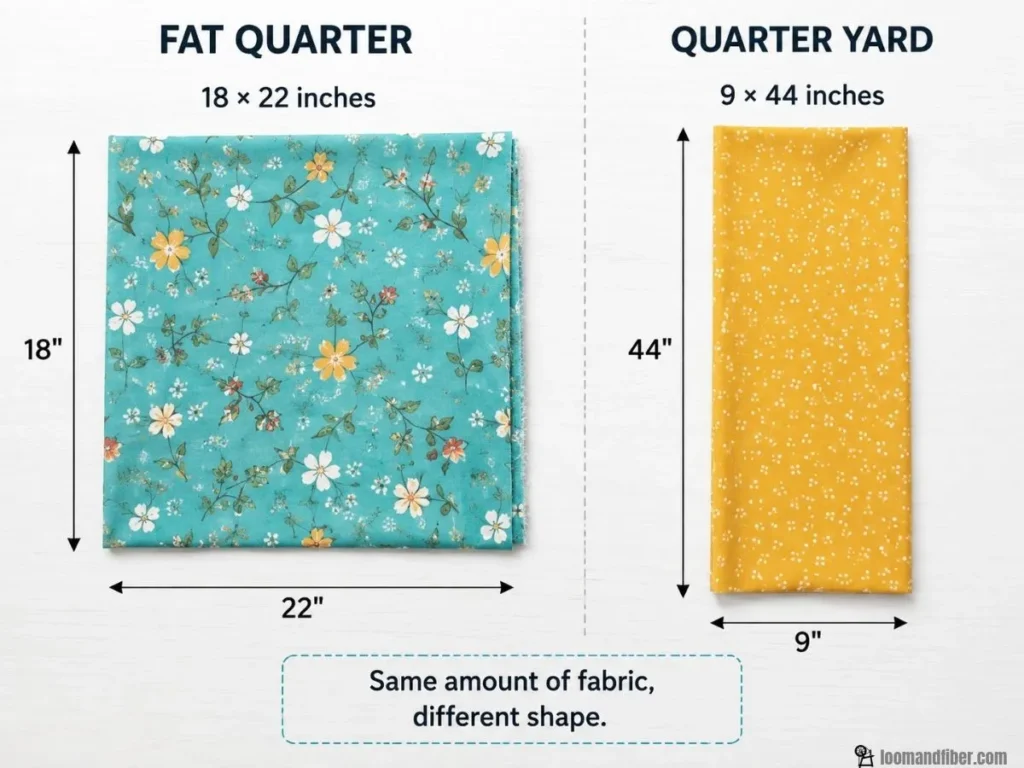
| Fabric cut | Typical dimensions | Shape |
|---|
| Fat quarter | 18 × 22 inches | Short and wide |
| Quarter yard | 9 × 44 inches | Long and narrow |
A regular quarter-yard of fabric is 9 inches wide and 44 inches long. Fat quarters are usually suitable for any quilting project, which involves wider blocks or multiple differently sized shapes. One can cut an 18-inch square from a fat quarter, but not from a regular 9-inch wide quarter.
However, sometimes a regular quarter-yard can be more suitable than a fat quarter for a quilting project. It is not always the bigger width, which is more important for a quilting project. But the dimensions of the pattern pieces.
Are All Fat Quarters the Same Size?
Not all fat quarters are the same size. Although most fat quarters in US measurements are roughly 18 × 22 inches or 46 × 56 cm, their dimensions can be slightly different. They can also vary depending on the country of sale or the type of fabric.
In countries, which sell fabric in metres, fat quarters can measure roughly 50 × 55 cm. This is produced by cutting 1 metre of fabric into halves and then into quarters. Metric fat quarters are slightly bigger than the most common US fat quarters.
Further differences in fat quarter size can occur due to hand cutting. Commercial pre-cuts usually follow standard sizes, but selvages can affect the usable width of a fat quarter. Prewashing can also make a fat quarter smaller due to shrinkage.
When buying fat quarters online, it is advisable to check the product description. Do not rely only on the name fat quarter, if buying fabric for a specific pattern.
How Much Fabric Is in a Fat Quarter?
An 18 × 22-inch fat quarter of fabric contains 396 square inches or roughly 0.306 square yards. It is actually a quarter of a yard, but in length only. When fabric is sold by the yard, it is 1 yard in length and full width of the bolt.
The difference between square yards and square inches comes from a misunderstanding of the term quarter. In fabric cutting, a quarter is a quarter of a linear yard in length, not a quarter of a square yard in area.
Four matching fat quarters are roughly equal to 1 yard of fabric, as long as they are cut from the same width of fabric. However, four fat quarters are not always equal to 1 continuous yard of fabric.
A yard of fabric can sometimes be more useful than four fat quarters. This depends on the sewing or quilting project, which uses the fabric.
Read More>> What is GSM in Fabric?
What Can You Make With One Fat Quarter?
One fat quarter is usually enough for a wide variety of small sewing and quilting projects. The most popular fat quarter projects are:
- Quilt blocks and patchworks
- Zipper pouches and small bags
- Fabric baskets
- Applique designs
- Cloth napkins
- Coasters and mug rugs
- Small cushion panels
- Doll clothing
- Baby accessories
- Scrunchies and hair accessories
- Pocket panels
- Decorative fabric accents
The actual amount of fabric produced by a fat quarter depends on the size and number of pattern pieces and their orientation. Some directional fabric prints also waste more fabric, because every element must be aligned the same way. One fat quarter is usually not enough for long straight pieces, such as clothes, curtains or large pillow backs.
How Many Squares Can You Cut From a Fat Quarter?
The number of squares depends on their finished cutting size and the actual usable dimensions of a fat quarter. From an 18 × 22-inch fat quarter, one can cut roughly:
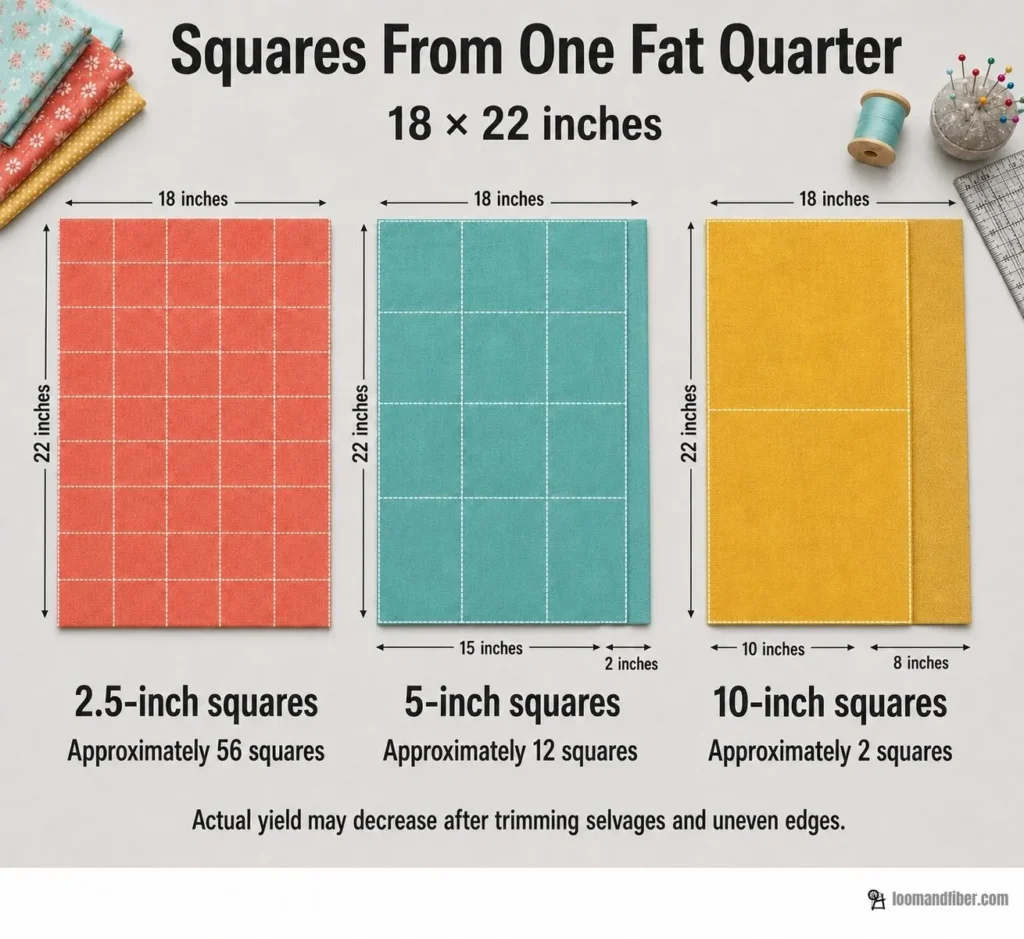
| Square size | Approximate quantity |
|---|
| 2-inch squares | 99 |
| 2.5-inch squares | 56 |
| 3-inch squares | 42 |
| 4-inch squares | 20 |
| 5-inch squares | 12 |
| 6-inch squares | 9 |
| 8-inch squares | 4 |
| 10-inch squares | 2 |
These calculations are done on the provided cutting sizes. The actual number of squares can be lower due to removing the selvages, straightening the edges, shrinkage and fabric imperfections. It is best to roughly sketch a layout from the usable width and length of a fat quarter, before cutting.
How Many Fat Quarters Equal One Yard?
4 fat quarters are roughly equal to 1 yard of fabric in terms of area. Therefore, the following conversions apply for fat quarters and yards of fabric:
- 4 Fat Quarters = 1 Yard
- 8 Fat Quarters = 2 Yards
- 12 Fat Quarters = 3 Yards
- 20 Fat Quarters = 5 Yards
This conversion only applies to the area of fabric. It does not apply to every quilting pattern, which requires longer, continuous pieces of fabric. 4 fat quarters can provide enough material for quilting blocks, but not for garments, borders or bindings.
How Many Fat Quarters Are Needed for a Quilt?
The number of fat quarters required for a quilt depends on its size, block design, background fabric, borders and wastage. Approximate ranges for simple fat-quarter quilts are:
| Quilt size | Estimated fat quarters |
|---|
| Baby quilt | 6–12 |
| Crib quilt | 8–15 |
| Lap quilt | 12–20 |
| Twin quilt | 20–30 |
| Full quilt | 25–35 |
| Queen quilt | 30–40 |
| King quilt | 40–50 |
These are general estimates rather than fixed rules. A quilt made entirely from fat quarters will require more pieces than using separate yardage for the background, borders or backing.
It is best to use the fabric requirements, which come with the quilting pattern. They are calculated according to the size of the pattern blocks.
Should You Prewash Fat Quarters?
It is not essential to prewash fat quarters, but it is optional. It is a matter of preference, which depends on the project. Prewashing cotton fabric removes excess dye and allows shrinkage to occur in advance. This can be useful for washable finished items, such as quilts, clothes or bags.
However, small precuts can fray and distort during washing. Many quilters also avoid prewashing fat quarters. It is better to buy a whole bundle of fat quarters from the same manufacturer. They will then match perfectly without prewashing.
If deciding to prewash fat quarters, it is best to use a gentle cycle. Protect the raw edges of the fabric and press the fat quarter before measuring. Never assume that a washed fat quarter still measures 18 × 22 inches.
How Should You Choose Fat Quarters?
It is best to choose fat quarters according to the sewing or quilting project, rather than the colour. The fibre content, weight and print direction of fabric also affect the choice of fat quarters. Quilting cotton is the most popular fabric for quilting projects.
Fat quarter bundles are ideal for selecting a variety of colours. They contain multiple designs from the same fabric collection. This allows the patterns in a quilt to blend together naturally.
Always check how many fat quarters are in a bundle before buying it. The number of fat quarters varies depending on the collection and manufacturer.
Conclusion-
Therefore, we can conclude that a fat quarter piece of fabric is roughly 18 × 22 inches or 46 × 56 centimeters in size. It is equivalent to a 9 × 44 (inches) quarter of a yard, but with a different shape.
It is useful for quilts, patchwork, applique, bags, and other small sewing projects. Note that there is often a variation in the size of the fat quarter depending on the seller and the country. Always check the actual size of the fabric before you buy.
Read More>> How big is Fabric by the Yard?
FAQs
It is wider but shorter than a quarter yard. Fat quarter and a quarter yard have the same amount of fabric, but different shapes. The fat quarter equals 18 × 22 inches, whereas the quarter yard is 9 × 44 inches.
No, a quarter of a yard is not half a yard. Half a yard is 18 × 44 inches. You can cut it into two equal parts, to get fat quarters.
Quilters like fat quarters because of their practical rectangular shape that fits more blocks in different sizes and patterns. They are also useful when you need to buy various prints in small quantities.
Four fat quarters can be used for a yard if you need small pieces for your project. However, if your pattern requires one long piece of fabric, you will not be able to use it.