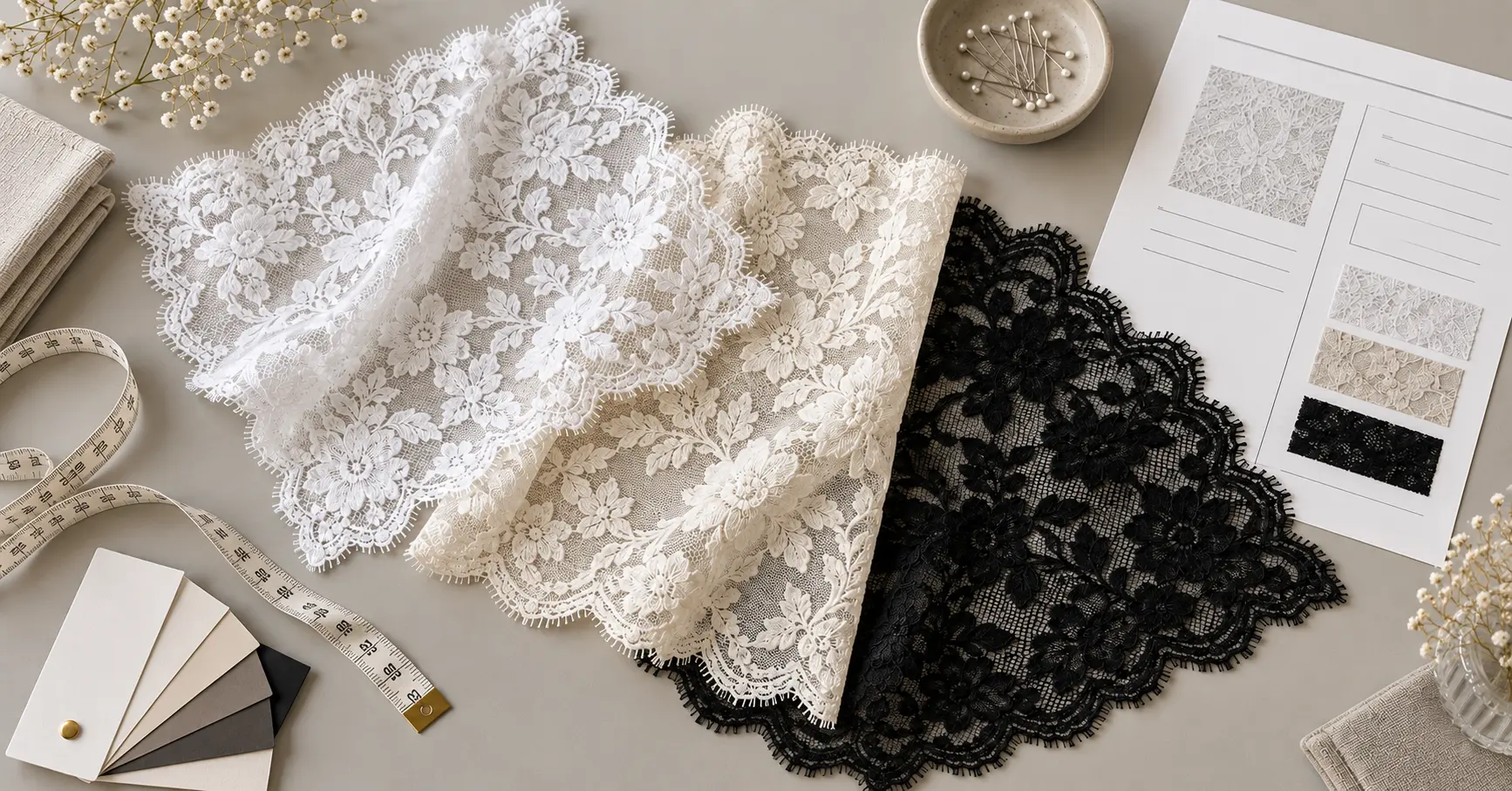

A lace sample is the cheapest place to catch a problem. Once bulk production starts, a wrong shade, weak stretch, or unclear pattern costs far more to fix. The key is sending a request specific enough that the supplier can send you something you can actually judge.
Decide Which Sample You Need
Different stages of sourcing call for different samples:
- Swatch or header card: a small cut for checking pattern, hand-feel, and general quality. Good for early screening.
- Meter or yardage cut: enough fabric to test sewing, drape, and make a prototype garment.
- Lab dip: a color-matched sample, used when you need the lace dyed to your own standard.
- Pre-production (PP) sample: taken from the bulk batch and approved before full production.
Asking for the wrong type wastes a shipping cycle, so state clearly which one you want.
What to Include in Your Request
A vague message like “please send black lace” usually gets a generic stock sample. Include:
- End use: lingerie, bridal, eveningwear, or trim.
- Design reference: article numbers, photos, or a physical swatch.
- Composition: for example, nylon/spandex or polyester.
- Width, weight, and stretch requirements.
- Color standard: a Pantone code or physical reference.
- Sample quantity, plus estimated order volume and timeline.
- Testing or certification needs required in your market.
- Delivery address and, if you use one, your courier account.
If you are working from a catalog, shortlist designs first and quote their item codes. A supplier’s product range, where you can Procure lace fabric, is usually the fastest place to collect those references.
How to Evaluate Samples When They Arrive
Check each sample against your reference under the same light source. A D65 lightbox is ideal for color judgments; otherwise, use consistent daylight.
Then review:
- Pattern definition: are motifs clear and consistent across the repeat?
- Edges: are scallops or eyelash edges cleanly finished, without loose threads?
- Stretch and recovery: does the lace return to shape after stretching?
- Wash behavior: run a test following your intended care label and check shrinkage and color change.
Also ask whether the sample came from existing stock or from the same production setup used for bulk. Stock samples may differ slightly from a new dye lot.
Common Mistakes to Avoid
- Approving a stock color, then ordering a custom shade without a lab dip.
- Skipping a PP sample on a first order with a new supplier.
- Not keeping a signed, labeled reference swatch for future quality checks.
Start Your Request
Prepare your spec list, attach references, and say which sample type you need. If you are sourcing lace for apparel or lingerie, you can contact Fuyuan knitting with your requirements to discuss sample options and next steps.