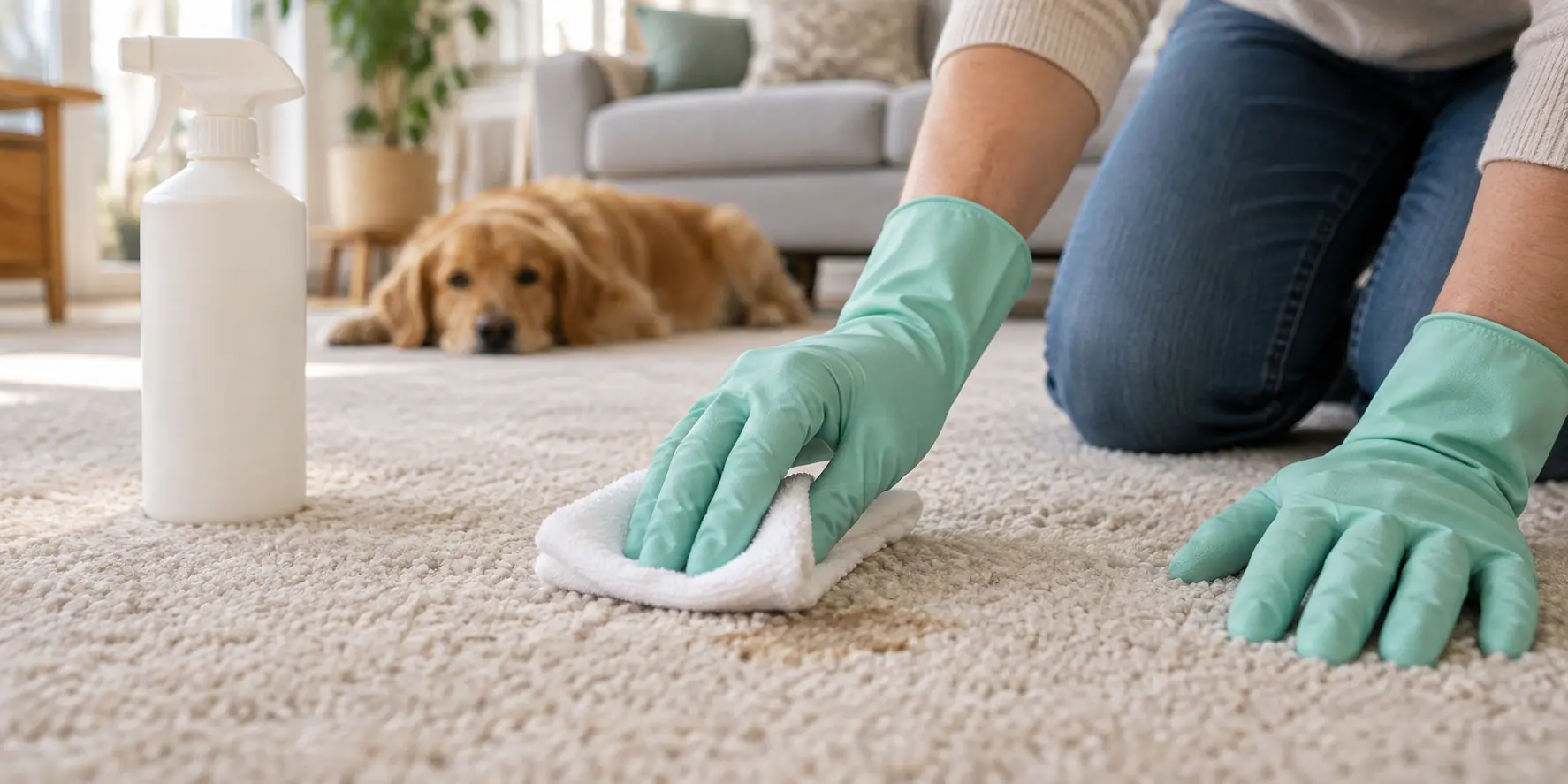

To clean dog poop out of carpet, lift away the solids, blot the moisture, then treat and dry the affected area. Never scrub away the mess, as it will only drive it further into the fibers. Fresh waste, dried deposits, and diarrhea each have slightly different cleaning techniques. The following steps detail how to manage each and what to do if there is an unsatisfactory result.
What You’ll Need Beforehand
Have the following items at hand so that you are not delayed in cleaning up the mess
- Disposable gloves,
- white paper towels or clean white cloths,
- a spoon, dull scraper, or pieces of stiff cardboard,
- a sealable bag,
- cool or lukewarm water,
- a carpet-safe enzymatic cleaner that specifically targets pet feces,
- an optional mild dishwashing liquid for initial spot cleaning,
- and a fan or dehumidifier.
Check the care instructions for your carpet before using any cleaner, and test an inconspicuous area for color bleed and feel. Wool, silk, natural fiber, and specialty carpets may require specific care or a professional cleaner.
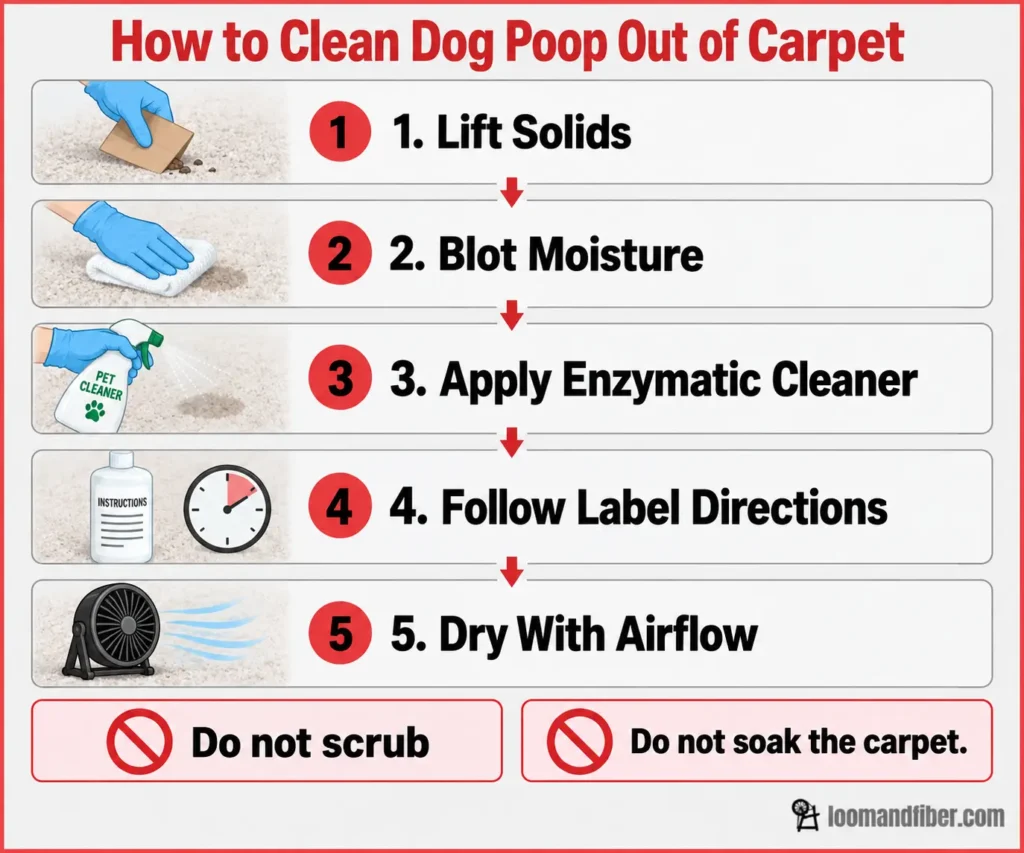
How to Clean Fresh Dog Poop Out of Carpet
It is easiest to remove fresh deposits before they penetrate deeper into the fibers. Take care not to spread the mess beyond where it landed.
Lift Away the Solid Waste
Put on your gloves, and use a spoon or two pieces of cardboard to lift the poop into the sealable bag.
Work from the outside of the mess towards the center and slide under the clumps rather than trying to scoop them up.
Never try to vacuum away the waste, as it will damage the vacuum cleaner.
Blot Up Moisture
Cover the damp spot with folded paper towels and gently press and lift to transfer the moisture. Repeat with fresh towels until they no longer absorb much liquid.
Do not rub or brush away at the spot. White towels allow you to see if any mess is being transferred, and prevents using a dyed cloth that could transfer color.
Apply an Enzymatic Pet Cleaner
Use a cleaner that specifically states it removes pet feces, and that is suitable for the type of carpet you have.
Apply the cleaner as instructed on the packaging, ensuring that you treat the whole area where the mess has been. Use enough to treat the fibers, but not so much as to soak the backing or padding.
Leave the cleaner to work for the stated time, and then blot or rinse as instructed. Depending on the product, you may need to blot away excess liquid, or simply leave it to dry.
An enzymatic cleaner breaks away the proteins and bacteria in the waste that could cause odor. It does not necessarily disinfect the carpet, so check the packaging to see if it does, or if you need a separate product.
Remove Excess Moisture and Dry
Once the contact time has passed, remove any excess liquid by blotting or rinsing, depending on the cleaner instructions.
Use clean dry towels to press into the spot to remove any extra liquid, then use a fan to help dry the carpet. A dehumidifier is also useful in this process, particularly in a more humid room.
Keep furniture and rugs off the area while it dries, as the backing may still be damp even if the carpet looks dry.
How to Remove Dried Dog Poop From Carpet
Dried deposits can be very stubborn, and may require some softening before they can be lifted away.
Remove Loose Pieces Carefully
Put on your gloves, and remove any pieces of the deposit that come away easily with a spoon or dull scraper.
Do not pull at the fibers of the carpet, or try to brush the mess into smaller bits.
Soften the Remaining Residue
Lightly dampen a white cloth with cool or lukewarm water and lay it over the deposit to soften it.
After a few minutes, lift the softened bits of the mess with a spoon, and blot away any moisture with a clean cloth. Repeat the process as needed, using just a few drops of water at a time.
Do not let the water run down the carpet fibers, as this could push the contamination further down.
Treat the Remaining Spot
Once the visible mess has been removed, treat the remaining damp spot with an enzymatic cleaner that is suitable for your carpet.
Follow the instructions to apply the product and ensure you leave it to work for the recommended time. Blot or rinse away any excess liquid, and then dry the spot thoroughly.
If there is still a smell once the area is dry, treat it again with an approved product. Do not try to clean the spot more thoroughly, or use more than one product at once.
How to Clean Dog Diarrhea Out of Carpet
Diarrhea can be more difficult to clean, as the liquid waste can penetrate deeper into the carpet and spread more widely. The priority is to remove as much of the liquid as possible.
Lift Any Thicker Material
Use a spoon or pieces of cardboard to lift away any thicker parts of the waste, taking care not to smear it across the fibers. Work from the outside of the area towards the middle, and put the deposits into the bag.
Absorb the Liquid
Lay paper towels over the damp spot and gently press to remove the moisture. Replace the towels as they become damp, until they no longer transfer waste from the fibers.
Do not try to scrub the mess, or add more water to help lift it away.
Treat the Carpet With a Suitable Cleaner
Treat the spot with an enzymatic cleaner that is suitable for pet feces, and follow the instructions on the packaging. A carpet cleaner that uses an extractant suitable for the product and carpet can also help to remove any excess solution.
Make sure you remove any visible deposits before using a cleaner that requires extraction, and always check the manufacturer’s guidelines.
Check for Deeper Contamination
If there was only a small amount of diarrhea, it may only need spot-cleaning and a thorough drying. However, the liquid could have traveled further down the carpet fibers, or soaked into the padding, and may need more thorough cleaning. Contact a professional if the smell returns after drying, or the area is noticeably damp.
Can You Use Dish Soap to Clean Dog Poop From Carpet?
A mild dishwashing liquid can be used to help lift away any visible deposits of poop, but it is unlikely to remove the source of a smell. It should only be used if the carpet can tolerate being washed with water.
To spot clean:
- Mix a solution of around ¼ of a teaspoon of mild dishwashing liquid with a cup of lukewarm water.
- Dampen a white cloth with the solution, and gently blot the remaining mark from the outside working inwards.
- Use a clean part of the cloth to continue lifting away the waste until it stops transferring.
- Blot the area with a clean cloth that has been dampened with just water, then press with dry towels to remove any excess liquid.
- Use as little of the solution as possible, and never use it if the carpet cannot tolerate water.
Avoid using dishwasher detergent, laundry detergent, or dishwashing liquids with bleach or other additives. If you use an enzymatic cleaner after spot-cleaning with dish soap, ensure you remove the soap first, and that the cleaner is compatible with it.
How to Remove a Dog Poop Stain That Remains
A visible mark may linger over the carpet, even after the solid waste has been removed. First, let the carpet dry so that you may be able to evaluate the outcome.
If there is a stain that remains:
- Repeat the enzymatic treatment if the label allows.
- For a remaining colored mark, use a carpet-compatible stain remover labeled for that type of stain.
- Test it on a hidden patch and treat the visible spot to its instructions and not mixing it with other cleaners.
- Avoid using household bleach or peroxide unless you know for certain it will not change the color of the carpet, and it is a specialist-recommended task.
- If the carpet becomes lighter than the rest of the piece, it has likely lost color, not had a stain.
How to Get Dog Poop Smell Out of Carpet
A lingering smell usually means that there is residue somewhere in the carpet, backing, or pad. The fragrance may mask it temporarily, but not remove it.
Repeat the Appropriate Enzyme Treatment
Make sure it is aimed for fecal odors and that you complied with the full contact time.
Treat the affected area according to the label. Do not keep adding cleaner without letting the recommended treatment and drying process be completed.
Dry the Entire Affected Area
Use towels to get rid of any excess moisture, and keep the area ventilated.
Open windows if the outdoors is dry, or use a dehumidifier if the air in your house is particularly damp. Do not use a hot hair dryer to dry a small patch of the carpet.
Investigate Odors That Come Back
If the smell disappears throughout the cleaning process but comes back later, it is likely that the contamination is buried more deeply than what you can see in the fibers.
Repeated soaking of the carpet can make this situation more difficult to resolve. A professional cleaner can evaluate the situation to see if extraction or reaching beneath the carpet is needed, or if the entire padding will need to be replaced.
Which Cleaning Method Should You Use?
| Carpet problem | Best starting method | Important precaution |
|---|---|---|
| Fresh, solid poop | Lift solids, blot, then use an enzymatic cleaner | Do not press waste into the pile |
| Dried poop | Remove loose pieces, soften residue, then treat | Avoid aggressive scraping |
| Diarrhea | Lift thicker material and absorb liquid before treatment | Check for contamination below the surface |
| Remaining stain | Use a compatible stain treatment after cleanup | Test for color changes first |
| Lingering odor | Repeat label-directed enzyme treatment | Investigate padding if the smell returns |
Mistakes to Avoid During Cleanup
Scrubbing the Mess
Scrubbing can disperse the waste, bury it deeper, and distort the pile of the carpet. Lift all solids and blot any liquid.
Soaking the Carpet
Pouring water over the area can disperse the contamination into the backing and pad. Apply controlled amounts of water over the area with a cloth, or as instructed by the cleaner’s label.
Mixing Cleaning Products
Do not mix cleaners together, or apply them in succession, unless the labels state that it is compatible. Mixtures can ruin the carpet, weaken the cleaning power of some products, or be hazardous when inhaled.
Using Vinegar and Baking Soda as the Main Treatment
These two ingredients are not a reliable substitute for the proper removal of fecal residue with a cleaner. The fizzing of combining these two ingredients together is not an indicator that the carpet is clean or disinfected.
Assuming Stain Removal Means Disinfection
A carpet may appear clean, but it can still be contaminated. Only apply any disinfecting product as the label recommends for your particular carpet, with the appropriate use.
After the removal process, remember to seal the bag of waste, clean any reusable tools, and wash your hands after removing the gloves.
Read More>> How to Clean Vomit from Carpet?
FAQs
Use cool or lukewarm water for the initial cleanup, unless the carpet or cleaner instructions say something different. Avoid boiling water and uncontrolled heat.
Do not use a regular household vacuum to clear visible fecal material. Lift it up manually, try to soften anything that has stuck to the fibers, and clean the area first. Then you may resume regular vacuuming after the area has been cleared and dried.
A suitable product can help with both organic residue and odors, but it is based on the carpet, the stain, and the depth of contamination. A remaining colored mark may need a separate compatible stain treatment.
One of the main culprits is that there is still waste in the area, or not enough time has been spent with the cleaner. It may also be because of contamination in the backing or padding. Let the area dry completely, revaluate, and contact a professional if the smell persists, after you have treated it correctly.
Call a professional cleaner when the affected area is large, the diarrhea has soaked through, multiple treatment attempts have failed, or the carpet requires specialist care. Deep contamination may need treatment beneath the carpet, or a replacement of the entire padding.