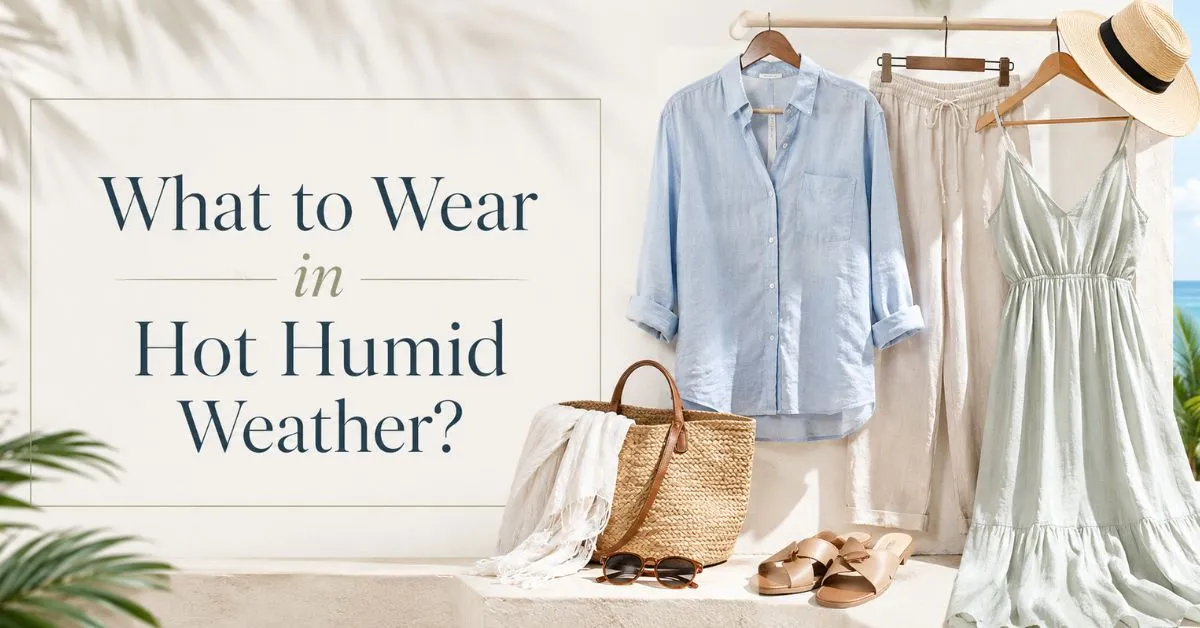

In hot and humid climates, opt for lightweight and airy fabrics, such as linen, which sit away from your body, along with cotton gauze tops, cotton lawn dresses, chambray shirts, lyocell trousers, bamboo viscose tops, rayon dresses, and moisture-wicking activewear. These fabrics support airflow, reduce cling, manage moisture differently, and dry faster depending on their fiber, weave, and construction. Clothing that fits too closely to the body feels hotter because, in humid climates, sweat does not evaporate easily. Thus, opt for loose flowing shirts, wide-leg pants, breathable shorts, and flowy dresses along with sandals, wide-brimmed hats, and light layers that provide sun protection. Avoid clothing such as skinny jeans, thick hoodies, heavy denim, leather shoes, and clingy fabrics. According to the Mayo Clinic, humid weather impairs the body’s ability to cool off through the evaporation of sweat.
What should you wear in hot humid weather?
Choose loose, lightweight, and breathable clothing with linen shirts, cotton gauze tops, loose cotton dresses, lyocell trousers, and rayon dresses. Wear sandals and moisture-wicking shirts, breathable hats, and light UPF layers.
In hot and humid weather, the right clothing improves airflow, reduces cling, manages moisture, and dries more quickly, especially when using fabrics that are woven or textured and with a looser fit.
The best outfit for humidity should allow air to move, keep sweat from sitting on the skin, and avoid trapping heat with thick or tight materials.
On humid days, try pairing a linen shirt with loose fitting shorts or wide leg pants. For the office, opt for cotton poplin, linen blends, and lyocell. For the gym, skip the cotton and go for moisture-wicking activewear.
Best Fabrics for Hot Humid Weather
Linen, cotton gauze, cotton lawn, chambray, lyocell, rayon, bamboo viscose, and moisture-wicking polyester blends are best for hot humid weather.
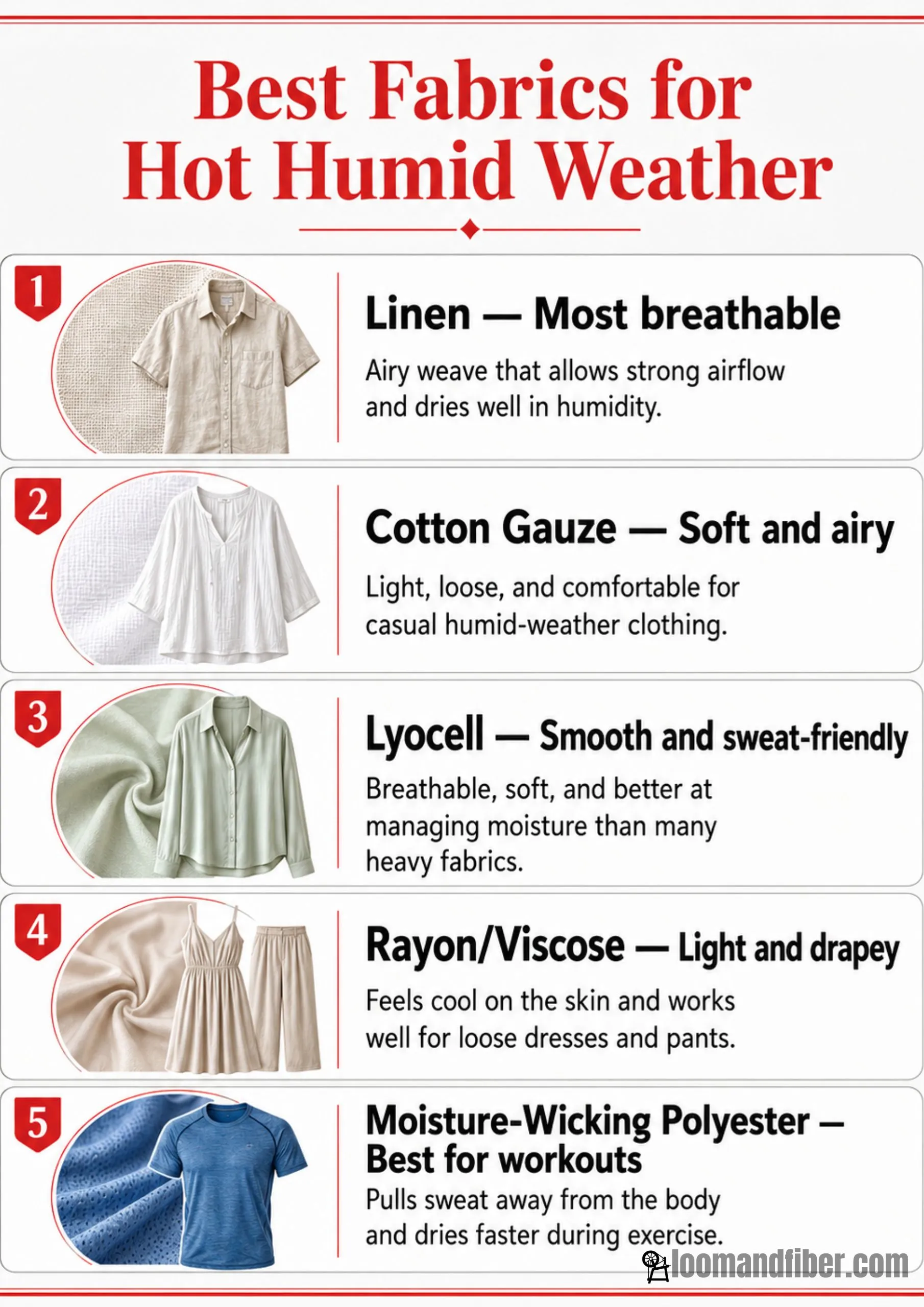
| Fabric | Best For | Why It Works | Weakness |
|---|---|---|---|
| Linen | Everyday wear, shirts, pants, dresses | Very breathable, airy, strong moisture handling | Wrinkles easily |
| Cotton gauze | Casual tops, dresses | Soft, loose weave, good airflow | Can look casual |
| Cotton lawn/poplin | Shirts, office wear | Crisp, breathable, polished | Can hold sweat longer |
| Lyocell/Tencel | Office, travel, dresses | Smooth, breathable, good moisture management | Can show sweat marks |
| Rayon/viscose | Dresses, loose pants | Light, drapey, cool feel | Can weaken when wet |
| Bamboo viscose | Soft casual wear | Smooth, breathable, comfortable | Quality varies |
| Moisture-wicking polyester blends | Exercise, activewear | Moves sweat and dries quickly | Can trap odor if low quality |
Choosing fabrics wisely matters because humidity affects how quickly sweat evaporates. In dry heat, we sweat and that moisture evaporates quickly. In humid heat, we sweat and that moisture lingers on our skin and our clothes. This is where fabric choice matters most. When that happens, we need fabric that is quick-drying and highly breathable.
Why Linen Works So Well in Hot Humid Weather
Linen combines low cling with the ability to manage moisture and airflow. A loose-fitting linen shirt will sit away from the skin allowing air to flow. Linen also dries faster than many heavier cotton fabrics.
Linen will wrinkle quickly, but the crisp structure and light touch allow the fabric to cling less to the skin compared to soft, clingy knits.
Is Cotton Good for Hot Humid Weather?
Cotton is good for hot, humid weather when it is lightweight, loose, and woven. Cotton gauze, cotton lawn, cotton voile, cotton poplin, and cotton seersucker outperform thicker cotton jersey and fleece.
In addition, cotton soaks up sweat and can hold moisture even during heavy sweating. Because of this, cotton is better for casual wear compared to intense exercise. Moisture-wicking synthetic blends tend to dry faster than cotton fleece during intense exercise.
Are Polyester Clothes Bad in Humidity?
Polyester clothes aren’t always bad in humidity. In fact, low-quality, thick polyester is known to trap heat and smell, while higher-quality, lightweight performance polyester that has wicking yarns, mesh zones, and quick-dry finish is great for sweating and exercising.
There is a huge difference in construction. A thicker polyester fashion top is going to feel sticky, while a thinner, good quality polyester shirt that is meant for running is going to wick moisture away from the body.
Best Clothing Styles for Hot, Humid Weather
Cool styles in hot humid weather include loose shirts, boxy tops, wide-leg pants, flowy dresses, lightweight shorts, and open footwear. There are many fabric options, but garment shape also matters. A very tight garment can feel much hotter, even if it is a breathable fabric. Leave a space between you and your clothing.
Loose Shirts and Boxy Tops
Loose shirts feel cooler because they allow air to flow throughout. Boxy linen shirts, camp collar shirts, cotton gauze tops, and oversized cotton button-downs all work well. Steer clear of ribbed tops when it’s hot and humid. Tight ribbed tops can trap sweat and reduce airflow. Opt for tops that are looser, woven, and have relaxed or dropped shoulder seams and side vents.
Wide Leg Pants and Loose Trousers
Wide-leg trousers and pants help you stay cooler than skinny jeans. With skinny jeans, heat gets trapped and has nowhere to go. Pants made from linen, cotton, or lyocell are perfect lightweight options. Denim can feel uncomfortable in humid weather because it is often thick and heavy. Tight denim also restricts airflow to your thighs and knees.
Breathable Dresses and Skirts
Breathable dresses made from lighter fabrics work well in humid weather because they allow airflow. Good options include cotton gauze dresses, linen dresses, rayon dresses, wrap dresses, and looser midi dresses. A-line and flowy skirts help reduce contact with skin. Bodycon dresses, especially the tight ones made with synthetic stretch fabrics, are not breathable and can also feel sticky in humid climates.
Lightweight Shorts
The best shorts for humid weather are linen, cotton twill, quick-dry, and loose athletic shorts. Choose relaxed fits rather than tight ones. Thick denim shorts can also feel uncomfortable in humid weather. Denim absorbs sweat, takes forever to dry, and feels rough. Choose softer and more lightweight options.
Open Footwear
Open footwear helps your feet stay cooler since people sweat a lot through their feet in humid weather. Good options include sandals, slides, breathable sneakers, mesh shoes, and moisture-wicking socks. These clothing types are your best bet for natural ventilation. Apply the same logic when choosing your socks and shoes. Use breathable shoes with wicking thin socks to help keep moisture and odor to a minimum.
What Not to Wear in Hot Humid Weather
You should avoid tight jeans, layered clothing, hoodies, leggings, leather shoes, and heavy clothing made from thick, non-breathable nylon or polyester.
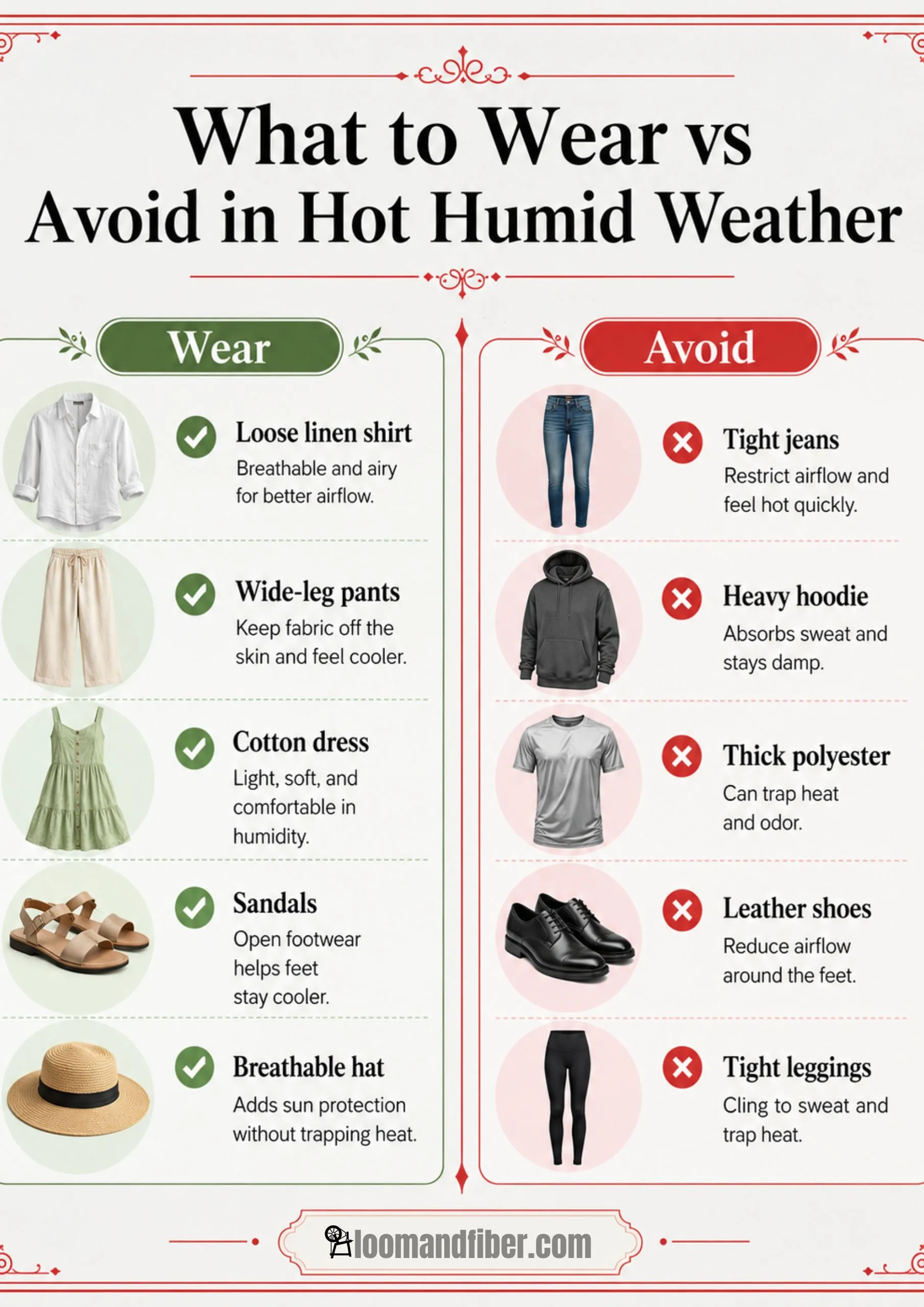
| Avoid | Why It Feels Bad in Humidity |
|---|---|
| Tight jeans | Restrict airflow and hold heat |
| Heavy cotton hoodies | Absorb sweat and stay damp |
| Thick polyester | Can trap heat and odor |
| Nylon windbreakers | Low airflow unless vented |
| Tight leggings for casual wear | Can cling and trap sweat |
| Leather shoes | Poor airflow in humid heat |
| Dark heavy layers | Absorb more heat outdoors |
Best Colors to Wear in Hot Humid Weather
In hot and humid weather, the best clothing colors are light colors. These include clothing colors that are white, cream, beige, light gray, pale blue, light khaki, and pastel colors.
The best clothing colors for reducing heat absorption are light colors. In direct sunlight, they reflect sunlight better than darker colors. In the heat, darker colors may help hide sweat but can absorb more heat in direct sunlight. However, printed fabrics can help disguise moisture marks. Light colors help with heat control, while darker colors and patterns can help disguise moisture marks.
In humid weather, using small prints and textured weaves can help disguise moisture better than solid light fabrics.
What to Wear in Hot Humid Weather for Different Situations
The best clothing features breathable materials, loose fits, sweat-friendly layering, and ventilated shoes.
Casual Daily
A good option is a linen shirt, loose cotton shorts, and sandals. This combination includes everything needed for good outfit airflow, lightweight clothing, and open footwear. A gauze cotton top with relaxed pants also works. Light colors are best if worn during the sunny hours. Choose subtle patterned clothing if you’re worried about showing wetness from sweating.
Office
A good option is a cotton poplin shirt, linen-blend trousers, and good loafers. This combination is a polished outfit and will help keep your body cooler. A lyocell blouse with a lightweight skirt suits humid offices too. Avoid thick blazers, unless your office uses heavy air-conditioning.
Travel / Tropical Vacations
A good combination is a lyocell shirt, linen pants, breathable sneakers, and a packable sun hat. This combination works well for airport travel and sightseeing. Good travel clothing is wrinkle resistant. Linen is good for comfort, but wrinkling is a drawback. For travel, lyocell and rayon pack well, drape nicely, and usually wrinkle less noticeably than linen.
Walking / Sightseeing
A good combination is a moisture-wicking t-shirt, lightweight shorts, and ventilated shoes. Don’t forget sun protection options like a hat and sunglasses. For long walks, cotton socks should be avoided. Socks that are thin and moisture-wicking are a good option to help reduce moisture buildup and friction and help prevent blisters.
Outdoor Work
A good combination is a UPF shirt, lightweight work pants, breathable socks, and a wide-brim hat. Choose safety footwear that has ventilation if possible. Outdoor workers require both cooling and protective measures. As a result, lightweight long-sleeved clothing may be a better alternative than short sleeves or shorts.
Exercise
The best moisture-wicking activewear options include quick-dry shorts, items with mesh panels, and quick-dry performance socks. Performance fabrics are effective for managing sweat and moisture. Heavy cotton T-shirts should be avoided for high-intensity workouts. Heavy cotton T-shirts become moist and heavy.
Rainy Humid Weather
Quick-dry clothing paired with a breathable, vented rain jacket works well. Water-friendly sandals or ventilated shoes work best. Plastic ponchos should be avoided for long walks. They keep rain out, but keep sweat in. A vented rain jacket is a better option.
Best Outfits for Men in Hot and Humid Weather
Men should wear loose linen shirts, cotton camp-collar shirts, chino shorts, lightweight trousers, moisture-wicking polos, sandals, or breathable sneakers.
| Situation | Best Men’s Outfit |
| Casual day | Linen button-down shirt + chino shorts |
| Weekend wear | Cotton camp-collar shirt + relaxed trousers |
| Travel | Moisture-wicking polo + lightweight travel pants |
| Beach town | Loose cotton T-shirt + linen shorts |
| Walking | Quick-dry T-shirt + athletic shorts |
| Smart casual | Linen-blend shirt + lightweight chinos |
| Footwear | Sandals, slides, mesh sneakers, or canvas shoes |
A camp-collar shirt improves airflow around the neck and feels less restrictive in humid weather.
Best Outfits for Women in Hot Humid Weather
Women should wear cotton gauze dresses, linen shirts, wide-leg pants, rayon midi dresses, lyocell blouses, lightweight skirts, sandals, or breathable flats.
| Situation | Best Women’s Outfit |
| Casual day | Cotton gauze dress + sandals |
| Office wear | Lyocell blouse + lightweight skirt |
| Travel | Linen shirt + wide-leg pants |
| Dinner | Rayon midi dress + breathable flats |
| Walking | Wicking top + loose shorts |
| Beach town | Cotton tank + palazzo pants |
| Smart casual | Linen dress + open sandals |
For casual hot-weather outfits, women should steer clear of wearing synthetic form-fitting dresses, thick denim shorts, and leggings. These casual styles mostly trap sweat and block airflow.
Loose, flowy dresses and skirts are most helpful for hot humid weather. They create less contact with the body. However, if you need a lining, choose a breathable one. Polyester linings can trap more heat inside the dress.
How Fit Affects Comfort in Humidity
Are loose clothes better in hot humid weather?
Generally, yes. Loose clothes create airflow between the fabric and your skin, especially in hot humid weather.
Loose clothing is better at letting air flow through than form-fitting clothing because of the space clothing creates between the fabric and your skin. With air pockets around your body, sweat doesn’t feel as trapped. Loose clothing fits away from your skin, which is useful in contact. Tight clothing slows the evaporation of sweat, which can cause an increase in friction. Because of this, leggings, jeans, and fitted synthetic clothing are best to avoid in climates of high humidity.
How to Dress for Sun Protection Without Overheating
Wear a wide-brim hat, sunglasses, breathable long sleeves, lightweight cover-ups, UPF clothing, and use sunscreen.
To protect yourself from getting sunburned and your body from overheating, it’s best to have loose and lightweight clothing. The Mayo Clinic recommends lightweight, loose-fitting clothing, a wide-brimmed hat, sunglasses, and sunscreen for heat protection. When the sun is very strong, you can wear breathable long sleeves. A lightweight long sleeve UPF shirt can feel better than having your skin in direct contact with the sun. For a full shade effect, a wide-brim hat is better than a baseball cap. But you should choose light, vented hats, straw weaves, or a lightweight technical material. Heavy hats will trap heat.
Best Clothes for Sweating in Humidity
What clothes are best for sweating in humid weather?
The best sweat-friendly clothing includes moisture-wicking shirts, quick-dry shorts, breathable underwear, wicking socks, linen garments, and patterned fabrics. Moisture-wicking clothing pulls sweat away from the body and dries quicker. Clothing with mesh panels helps with airflow. Casual clothing can include linen and materials such as cotton gauze, seersucker, and chambray. These fabrics are comfortable when they are allowed to hang away from the body.
Thick, heavy, and absorbent cotton should be avoided because it can become bogged down with sweat. Carrying a spare shirt is a must in extreme humidity. The right kind of underwear and socks can make a big impact on comfort. Thin, wicking socks and breathable underwear can also help.
Hot Humid Weather Clothing Checklist
What should you pack for hot humid weather?
Breathable, loose, light tops and bottoms, quick-dry shorts, open shoes, wicking socks, sun protection, and a vented rain shell.
| Clothing Item | Best Choice |
|---|---|
| Shirt | Linen, cotton gauze, lyocell, moisture-wicking tee |
| Pants | Linen pants, wide-leg cotton, lightweight travel pants |
| Shorts | Linen shorts, quick-dry shorts, cotton shorts |
| Dress | Cotton gauze, rayon, linen, lyocell |
| Shoes | Sandals, breathable sneakers, mesh shoes |
| Socks | Thin moisture-wicking socks |
| Hat | Wide-brim breathable hat |
| Outer layer | Lightweight UPF shirt or vented rain shell |
This packing list is great for both tropical vacations and summer city trips, humid beach trips, and office commutes. Adjust for dress codes and the level and type of sun exposure and activity.
Common Mistakes People Make in Hot Humid Weather
Poor choices include tight clothing, thick cotton, dark heavy clothing, non-breathable shoes, and ventless rain jackets.
- Wearing Tight Clothing
Tight clothing restricts airflow and holds sweat against the skin. A tight shirt can feel much hotter than a loose woven shirt.
- Choosing Thick Cotton Where Sweat is Heavy
Thick cotton can stay wet. T-shirts, hoodies, and sweatshirts can become uncomfortable in humid weather.
- Wearing Dark Heavy Outfits Where the Sun Shines
Dark colors can conceal sweat but can feel warmer. Dark colors can be used, but should not be used automatically.
- Neglecting Feet
Non-breathable shoes and thick socks can cause sweat, odor, and discomfort.
- Wearing Rain Jackets that Don’t Vent
Pit zips, back vents, and mesh linings help prevent rain jackets from trapping sweat.
- Assuming All Polyester is Bad
Some polyester can smell and trap heat, but moisture-wicking performance polyester can be good for exercise.
- Assuming All Cotton is Good
Heavy cotton can trap moisture and dries slowly. Light cotton can be good, but look for the weight and weave.
Conclusion-
When answering what to wear during hot, humid weather, the answer is straightforward. Prefer clothing that is lightweight, loose, & breathable to help manage sweat and airflow. The best fabric options include: linen, cotton gauze, cotton lawn, chambray, lyocell, rayon, & bamboo viscose. Flowy silhouettes are especially beneficial in hot, humid weather: wide-leg pants, loose shirts, flowy dresses, shorts, & breathable sandals. Sun hats are also a good option.
Heavy hoodies, leather shoes, non-vented rain jackets, & tight jeans are not good options. For clothing worn in direct sunlight, choose light colors to reduce heat absorption. For sweat-prone areas, choose patterned fabrics to help hide moisture marks. Prioritize breathable fabrics instead of choosing style at the expense of comfort in humid weather. In humid weather, the lightest and most breathable fabrics are the most comfortable fabrics.
Read More>> Best Fabrics for Hot Humid Weather.
FAQs: What to Wear in Hot Humid Weather
Linen is one of the best options when selecting a fabric for hot and humid weather. It is breathable, not sticky, and can be worn in loose cuts. Other options include gauzy cotton, lyocell, rayon, and blends of moisture-wicking fabric.
Linen is better in humid weather because of its quick-drying nature and breathable quality, but some light cotton gauze and cotton lawn can be cool as well.
Jeans are not a great option in hot and humid weather because of the heavy, dense nature of the fabric. Skinny jeans can be even worse because of the restricted airflow.
Wear moisture wicking shirts and quick dry shorts, but also breathable underwear and thin wicking socks. Patterns and textured fabric can help disguise sweat marks.
In casual settings, leggings are not great for humid weather because they cling to the skin and can hold sweat. However, if the leggings are lightweight and meant for performance, they can be okay for the situation if they are worn for a workout.
Prefer a cotton poplin shirt, linen blend trousers, lyocell blouse, lightweight skirt, breathable loafers, and avoid thick blazers and heavy synthetic linings.
When sun exposure is high, it is okay to wear long sleeves. Prefer breathable linen, cotton, lyocell, or UPF-rated fabrics.