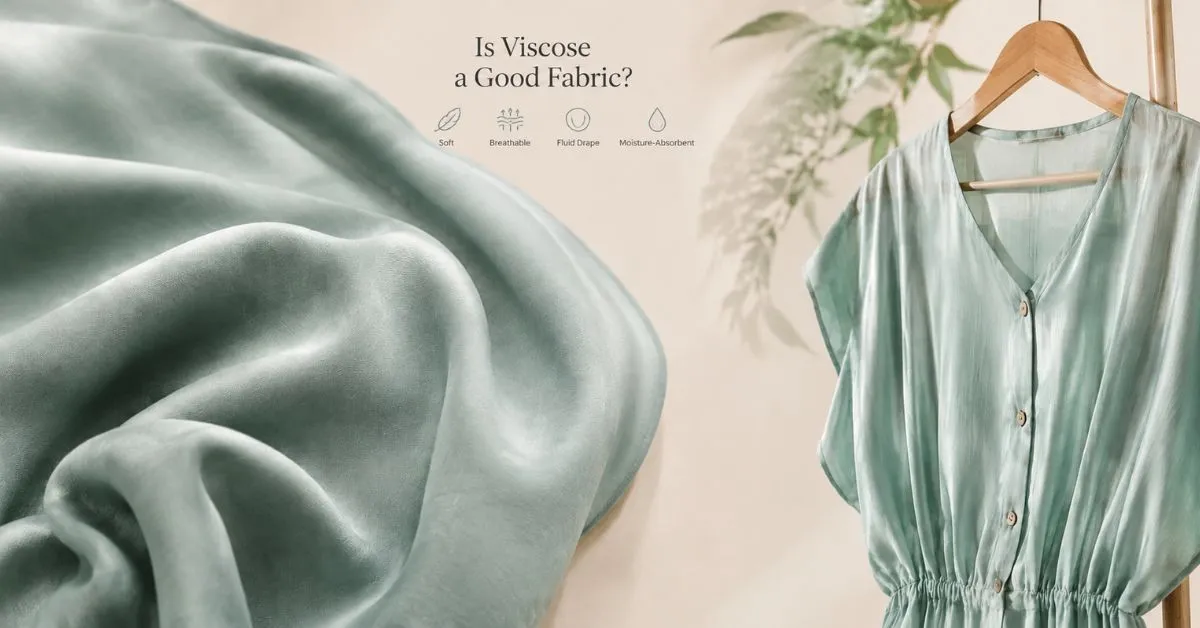

Viscose is a good fabric for soft, breathable clothing with a delicate drape. It is a pleasant fabric to wear, highly versatile and often affordable. The fiber imitates the look and feel of silk, cotton or linen, making it a popular choice for dresses, blouses, skirts, trousers, linings and summer clothes.
However, viscose is not the best material for all garments. Plain viscose is often weak, wrinkles easily, shrinks when washed and loses shape when handled improperly. The environmental impact of viscose production depends on the wood pulp source and chemical management practices. Always consider fiber quality and care instructions when shopping for viscose clothes.
What Is Viscose Fabric?
Viscose is a regenerated cellulose fiber produced from wood pulp. The cellulose is dissolved in chemicals and extruded through spinnerets to form staple fibers or continuous filaments. Viscose is not a natural fiber like cotton or wool, nor is it a synthetic polymer like polyester or nylon. It is a manufactured cellulosic fiber.
Rayon is a term that encompasses all types of manufactured cellulose fibers, including viscose. In other words, viscose is a type of rayon. The terms are often used interchangeably, but rayon is a broader category of fibers.
Is Viscose a Good Fabric for Clothing?
Viscose is a good fabric for many types of clothing. It is especially good for garments that require a soft, breathable and flowing fabric. The fiber has a fine, almost silky surface that feels pleasant against the skin. Its drape is also remarkable, allowing dresses and blouses to flow beautifully.
Viscose is more absorbent than many synthetic fibers, which means it can pull moisture away from the skin. However, it is not as quick-drying as polyester athletic fabrics. Good moisture management is important in hot weather, but viscose may leave you feeling damp if worn in a tropical climate.
The main drawback of viscose is that it is often delicate. Cheap viscose can pill, stretch, shrink or lose shape when washed. Clothes made from viscose filament or staple fibers perform better with proper care.
Main Benefits of Viscose Fabric
Soft and Comfortable
Viscose is usually a very soft and comfortable fabric. Finer viscose fibers can be light enough to float on the skin. Delicate viscose clothing may irritate sensitive or acne-prone skin, depending on the dye and finish.
The comfort of viscose makes it a good choice for everyday wear, nightwear, underwear linings and summer dresses.
Good Drape
Drape is the ability of a fabric to hang in folds and creases. Viscose has a better drape than cotton or polyester. This quality is especially noticeable in wrap dresses, wide-leg trousers, skirts and scarves.
A viscose fabric with poor drape is still a good choice for flowing blouses or dresses. However, it may not provide enough structure for tailored garments. Blended fabrics or interlinings are often used to add stiffness to viscose clothes.
Breathable Properties
Viscose is a breathable fabric that allows air and moisture to pass through. The actual breathability of a garment depends on the weave or knit, weight and finish of the fabric.
As a rule of thumb, a light viscose weave will be more breathable than a heavy one. So, it is a good idea to look for a viscose fabric with an open weave in warm weather.
Moisture Absorption
Viscose has a good moisture absorption capacity. It can pull sweat and moisture away from the skin, preventing the uncomfortable sticky feeling of hydrophobic synthetic fibers. However, viscose fabric can also retain moisture, especially when wet.
Wet viscose can become unpleasantly heavy and may take a long time to dry. As with other garments, it is important to let viscose clothes dry thoroughly after washing.
Colorfastness and Printability
Viscose fiber has good colorfastness and can be dyed in a wide range of colors. Viscose fabric can also be printed beautifully in complex patterns, making it a popular choice for floral and geometric prints.
Colorfastness varies depending on the printing method and after-treatment. Always check if dark or printed viscose clothes are colorfast before buying.
Affordable Alternative to Silk
Silky viscose can imitate the look and feel of expensive silk fabrics at a much lower price. Viscose is often used to make special garments with a luxurious appearance. It is more affordable and easier to care for than silk, but it has a shorter lifespan and cannot match the strength of natural fibers.
Blending Possibilities
Viscose can be blended with other fibers to create a fabric with a unique combination of properties. Viscose is often combined with:
Cotton or linen – to improve the drape and create a fabric with the look of natural fibers.
Polyester – to add wrinkle resistance, strength and reduce shrinkage.
Elastane – to add stretch and comfort.
Wool – to create a soft, warm fabric suitable for suits or knitwear.
Cotton – to enhance absorbency and create a familiar natural appearance.
A blended viscose fabric is not always better than a pure fabric. It all depends on the desired look and the characteristics of the garment.
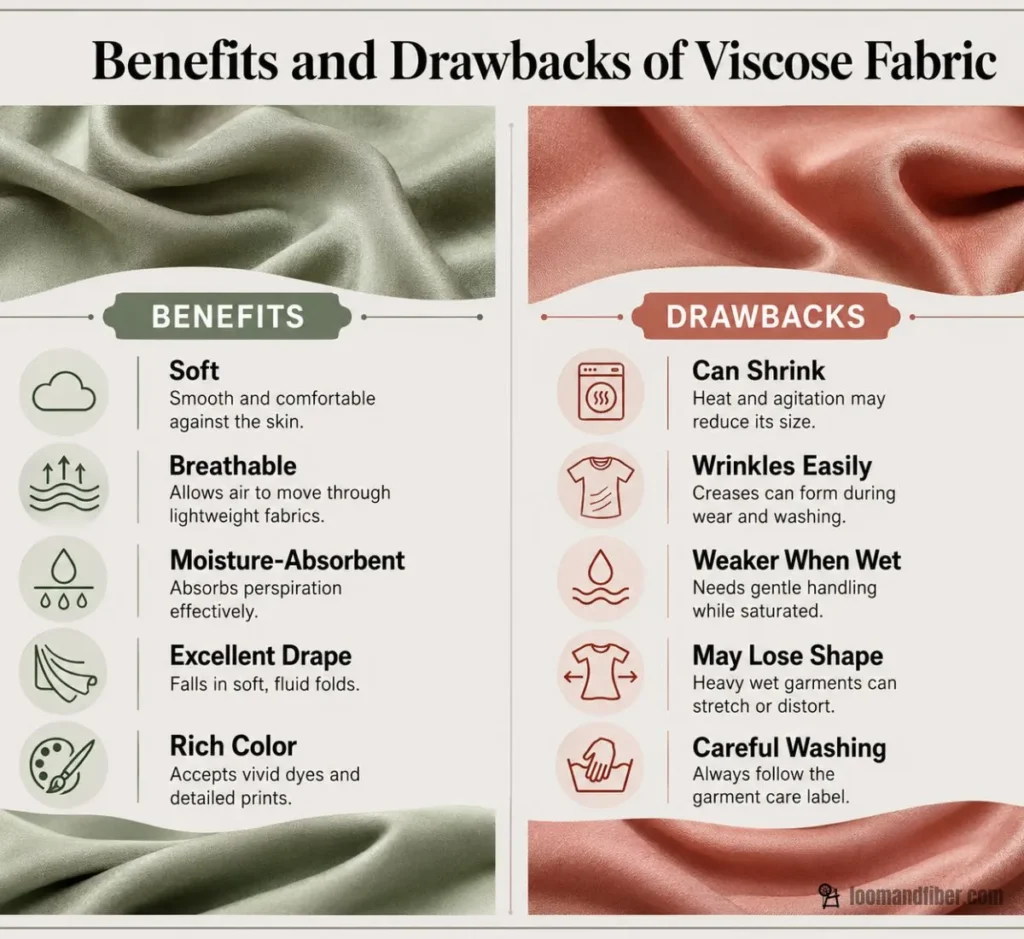
Disadvantages of Viscose Fabric
Weak When Wet
Wet viscose is significantly weaker than dry viscose. Pulling, twisting or wringing a wet viscose garment can permanently damage the fabric. Some modern viscose fabrics have improved wet strength, but it is always a good idea to follow the care instructions.
Shrinkage
Viscose fibers tend to shrink when exposed to water. This shrinkage becomes apparent when the garment is washed and dried. Shrinkage is affected by the fiber composition, weave or knit, and the washing and drying instructions.
Viscose clothes that have not been properly pre-shrunk are particularly prone to size reduction. Always check the care instructions before washing a viscose garment.
Wrinkles Easily
Wrinkles are a common problem with viscose garments. Thin woven viscose clothes may require steaming or ironing at a low temperature to remove wrinkles. Some viscose fabrics are more resistant to wrinkling and can be mixed with polyester or treated with special finishes.
Stretch and Loss of Shape
Wet viscose clothes can stretch when worn or hung. A damp viscose dress or sweater can slip off the hanger and stretch out of shape. Clothes with a bias cut or a loose knit are especially likely to stretch when wet.
It is a good idea to reshape wet viscose garments and avoid hanging them until they are completely dry.
Read More>> Is Viscose Fabric Stretchy?
Pilling
Pilling is a common problem with viscose fabrics, especially when made from short fibers. Fine viscose yarns tend to pill more easily when worn or washed. Pilling is a problem for garments made from a viscose blend or viscose staple fibers.
Pilling resistance depends on the quality of the yarn, fabric construction, fiber length and the finishing treatment. Viscose fabric pilling should be tested before production, as two fabrics with the same fiber content can perform differently.
Environmental Impact
Viscose fiber is made from renewable resources such as wood pulp. However, the viscose production process is associated with the use of toxic chemicals. The environmental impact of viscose production depends on the source of the pulp and the waste management system.
Some viscose manufacturers use closed-loop systems that recycle chemicals and reduce emissions. The choice of wood pulp also affects sustainability. Some viscose products are made from pulp produced in a responsible way from managed forests.
Is Viscose a Good Fabric for Hot Weather?
Viscose is a good fabric for hot weather because it is often soft, light and breathable. Viscose garments allow good airflow and can absorb sweat, making them ideal for warm climates. However, tightly woven viscose clothes can become less breathable due to the density of the weave.
Some tips for choosing viscose clothes in hot weather:
- Loose viscose weave is more breathable and comfortable in warm weather.
- Heavy viscose fabrics are less breathable and may cause overheating.
- Clothes with an open construction are the most ventilated.
- Dark viscose clothes absorb more heat than light ones.
- Viscose garments with special finishes may be less breathable and uncomfortable in the heat.
Woven viscose fabric is more breathable than knit viscose. However, both types of clothes can be worn in hot weather with caution. Viscose is not as quick-drying as technical athletic wear, so it may be uncomfortable to sweat in.
Is Viscose Good for Sensitive Skin?
Viscose is often good for sensitive skin because it is a smooth fabric that rarely irritates the skin. The fiber has a soft surface that is less likely to cause mechanical irritation. However, this does not mean that viscose is completely hypoallergenic.
Irritation often occurs due to the additives used in the processing and dyeing of the fabric. Viscose clothes may also irritate sensitive skin when worn with unsuitable detergents. To reduce the risk of irritation, choose garments made from minimally processed viscose and wash them before wearing.
Is Viscose Stretchy?
Woven viscose fabric does not have much stretch, but it can be worn with a bias cut or special weave to provide a good stretch. Viscose knitwear has a greater stretch due to the nature of the knitting process. Viscose is often blended with elastane to create a stretchy viscose fabric.
Viscose-elastane blends are often used to make tights, dresses, underwear and other garments that require a good stretch. Viscose knitwear is a good choice for stretchy and comfortable clothing. However, the stretch of viscose clothes depends on the fiber content and the knitting or weaving technology.
Read More>> Is Polyester Stretchy?
Is Viscose Durable?
Viscose is a durable fabric when made properly, but it is not as strong as many synthetic fibers. Viscose clothes often pill, shrink or wrinkle when worn or washed. It can last for many years with proper care, but it is not the best choice for rough use or abrasive surfaces.
The durability of viscose depends on several factors:
- Fiber quality and yarn
- Fabric weight
- Weave or knit density
- Wet strength
- Resistance to pilling
- Seam quality
- Finishing treatment
- Washing and drying conditions
Viscose is a versatile fiber that can be used to make dresses, shirts, skirts and linings. However, it is usually too delicate for heavy workwear or abrasion-resistant clothing.
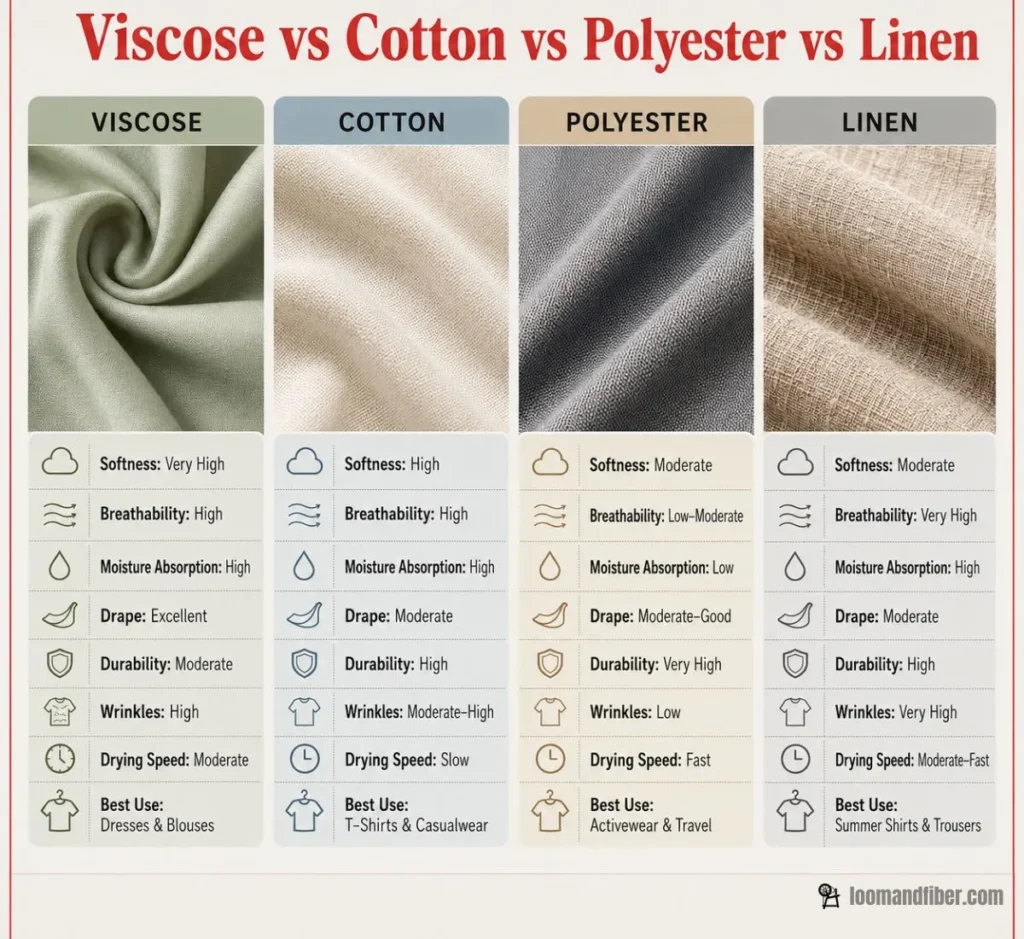
Viscose vs Cotton vs Polyester vs Linen
Viscose vs Cotton
Both viscose and cotton are cellulose-based, breathable and absorbent materials. However, they differ in structure and performance.
Cotton is a natural fiber, while viscose is a regenerated cellulose. Cotton is usually stronger when wet and easier to care for. Viscose is often softer and has better drape.
Choose cotton for relaxed wear and frequent washing, and prefer viscose for smoothness and fluidity.
Viscose vs Polyester
Viscose is more absorbent and often cooler to the touch than polyester. The latter is generally stronger, easier to care for, less prone to wrinkles and faster drying.
Polyester is a good choice for sportswear, uniforms, outerwear and travel clothes, while viscose is more suitable for flowing garments and warm-weather wear.
A viscose-polyester blend often combines the benefits of both fibers, but its performance depends on the percentage of each component and the fabric structure.
Viscose vs Linen
Linen is stronger and more breathable than viscose, but it is also harder to find in viscose qualities. Linen has a more pronounced natural look, while viscose is smoother and more fluid. Both fibers are prone to wrinkling, but linen’s creases are considered a staple of the fabric’s charm.
A viscose-linen blend often has less stiffness than pure linen, while retaining most of the beneficial qualities of natural linen. It is a great option for summer dresses, trousers, shirts and tailoring.
Viscose vs Modal and Lyocell
Viscose, modal and lyocell are all regenerated cellulose fibers, but they differ in processing technology and performance.
Modal is usually softer and more resistant to repeated washing than viscose, which makes it a popular choice for underwear and knitwear. Lyocell is often stronger and more consistent in quality, with reduced environmental impact due to an advanced closed-loop production process. However, the sustainability of lyocell depends on the manufacturer and the source of raw materials.
In general, standard viscose is the cheapest of the three, while modal and lyocell offer better value for money. Fiber content on its own does not guarantee the quality of a fabric or garment.
Common Uses of Viscose
Viscose is commonly used in:
- Dresses and skirts
- Blouses and shirts
- Wide-legged trousers
- Scarves
- Garment linings
- Loungewear
- Sleepwear
- Lightweight knitwear
- Underwear blends
- Printed fabrics
- Upholstery and decorative fabrics
- Polyester-viscose suits
Viscose is preferred in fashion garments that require fluidity and drape, rather than abrasion resistance or stiff structures.
How to Judge Viscose Fabric Quality
When buying viscose clothes or fabric, look beyond the fiber content and pay attention to the following details.
Look at the Fabric Density
Hold the material against a light source. A viscose fabric that seems too loosely knit or woven may have reduced coverage, unless it is designed to be sheer.
Test Surface Recovery
Make a small crease in the fabric with your nail and release it. This is a simple way to see how easily the material will wrinkle.
Check for Distortion
Try stretching the fabric in different directions and look at the surface for irregularities. This test is especially important for viscose jersey, as it highlights poor recovery.
Check the Care Label
See if the garment is machine-washable, hand-washable or dry-clean only. A viscose item with a delicate care label may not be worth the money if it requires expensive dry cleaning.
Request Performance Tests
For commercial buyers, it is important to request tests for:
- Dimensional stability
- Colorfastness
- Pilling resistance
- Fabric strength
- Seam slippage
- Spirality (for knitted fabrics)
- Fabric weight(GSM)
- Stretch and recovery (if applicable)
You may also want to compare bulk fabric to the reference sample before cutting commences.
Look for Responsible Sourcing
Check if the manufacturer has credible information on responsible forestry, pulp sourcing, chemical management and wastewater treatment. Certifications are a good sign, but generic terms such as “natural,” “plant-based” or “eco-friendly” say little about the actual production conditions.
How to Wash and Care for Viscose
Always follow the care label, as viscose garments and fabrics can be very different in terms of finishing and construction.
In general, you should:
- Use cold or warm water
- Use a gentle cycle if machine washing is allowed
- Use a mild detergent
- Avoid rubbing or twisting the fabric
- Wash dark garments separately
- Reshape the garment while damp
- Dry the item on a flat surface or hang it according to the care label
- Avoid high heat in tumble dryers
- Iron at a low or medium temperature from the wrong side
- Use a pressing cloth for delicate or printed fabrics
Do not attempt to hand-wash a dry-clean-only garment, as water can affect the fabric finish, garment shape, lining or other components, even if the outer fabric is washable.
Is Viscose Sustainable?
Viscose can be a sustainable fiber with responsible production practices, but it should not be considered inherently sustainable. Like any other textile, viscose has environmental benefits and drawbacks that should be reviewed on a case-by-case basis. Viscose’s sustainability credentials largely depend on the source of wood pulp, the production technology, fiber quality and end-use application. A viscose garment made with a closed-loop system from certified forests is much more sustainable than a cheap viscose dress that will pill, shrink and wear out after a few months of light use.
When choosing between viscose and other fibers, remember that blends are usually harder to recycle than pure fabrics. For instance, viscose-polyester or viscose-elastane garments have a lower potential for circularity compared to viscose-cotton or viscose-lyocell blends.
When Is Viscose a Good Choice?
Viscose is a good choice when you need:
- A soft fabric that will not irritate the skin
- Fluid drape and elegant silhouette
- Breathable summer clothes
- Rich colors or intricate prints
- A cheaper alternative to silk
- Comfortable dresses, blouses or loose-fitting trousers
- Viscose is not a good choice when you need:
- Extreme abrasion resistance
- Hot water washing
- Quick-drying performance
- Maximum wrinkle resistance
- Sturdy outdoor or industrial wear
- Minimum care instructions for garments
Conclusion-
So, is viscose a good fabric? Viscose is a good fabric for dresses, blouses, skirts, linings and summer clothes, as it provides desirable drape, color range and comfort at a reasonable price. Its main weaknesses are reduced wet strength, shrinkage potential, wrinkling tendency and mixed sustainability credentials. Viscose performance ultimately depends on the fabric structure, production standards and care, so it is best to choose viscose garments with a good balance of quality and value for money. Viscose should not be considered good or bad on its own, but rather in relation to the intended use and care instructions.
Read More>> Is Minky Fabric Double Sided?
FAQs
Viscose fabric is breathable and can be worn in warm climates, but a viscose garment can still make you sweat depending on the weight, weave and fit. Viscose is not a good choice for hot and humid weather unless it is a light fabric with an open weave.
Viscose fabric can shrink if exposed to high heat or agitation, so it is important to follow the care label. Never tumble dry a viscose garment at a high temperature if the care label says “hand wash only.”
It depends on the desired performance. A pure viscose fabric generally has a better drape and softness than a viscose blend, but a viscose-polyester or viscose-lyocell blend can be more resistant to wrinkling and stretching. Always consider the intended use when choosing between viscose blends and pure viscose fabrics.
Yes, viscose is a good choice for summer dresses due to its lightness, fluidity and breathability. Viscose is generally more comfortable than polyester in warm weather, but it can be slower to dry when wet.
Viscose is generally softer and more fluid than cotton, but cotton is stronger when wet and easier to care for. Viscose is better than cotton at providing elegant drape, while cotton is generally more comfortable for everyday wear.
Most viscose fabrics tend to wrinkle easily, but blends and special finishes can reduce wrinkling. Always check the care label, as some viscose garments require special care to avoid wrinkles.