
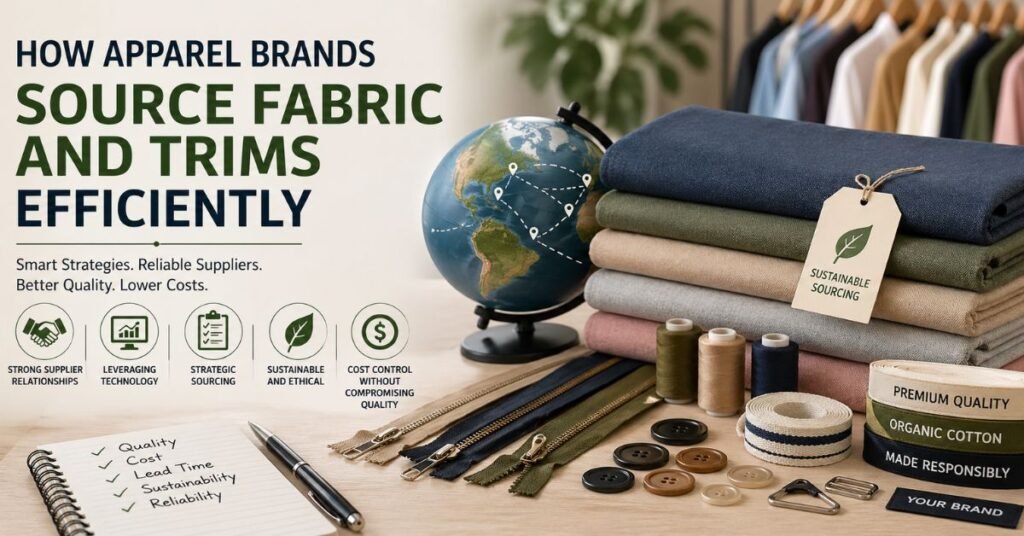
The global fashion industry moves at an incredibly fast pace, where timing, quality, and cost control determine success. For apparel brands, sourcing fabric and trims efficiently is not just a back-end operation but a strategic function that directly impacts product quality, brand reputation, and profit margins. From selecting the right textile mills to partnering with a reliable garment trims supplier every step requires precision, planning, and strong supplier relationships.
Understanding Fabric and Trim Sourcing
Fabric and trims are the foundation of any garment. Fabric determines the look, feel, and durability of a product, while trims such as buttons, zippers, labels, and threads enhance functionality and design. Efficient sourcing means finding the right balance between quality, cost, and lead time.
Modern apparel brands often source materials globally to stay competitive. This includes working with textile hubs in countries known for specialized production. However, global sourcing also introduces challenges like shipping delays, communication gaps, and quality inconsistencies. Brands that succeed are those that streamline their sourcing strategies and build reliable supply chains.
Building Strong Supplier Relationships
A key factor in efficient sourcing is developing long-term partnerships with trusted suppliers. Instead of constantly switching vendors, successful brands focus on collaboration and consistency.
Working closely with a dependable garment trims supplier ensures access to consistent quality and timely delivery. It also allows brands to negotiate better pricing and receive priority during peak production seasons. Communication plays a crucial role here. Clear specifications, regular updates, and mutual trust help avoid misunderstandings and production delays.
Additionally, many brands now prefer suppliers who offer integrated services, including design support, sampling, and logistics. This reduces the need to coordinate with multiple vendors and improves overall efficiency.
Leveraging Technology in Sourcing
Technology has transformed the way apparel brands manage sourcing. Digital tools and platforms allow brands to connect with suppliers, compare prices, and track orders in real time.
Supply chain management software helps brands forecast demand, manage inventory, and avoid overproduction. Virtual sampling and digital fabric libraries also reduce the need for physical samples, saving both time and cost. These tools are particularly useful for fast fashion brands that need to launch new collections quickly.
Moreover, data analytics enables brands to evaluate supplier performance, monitor quality standards, and identify areas for improvement. This data-driven approach leads to smarter decision-making and more efficient sourcing processes.
Strategies for Efficient Fabric and Trim Sourcing
To stay competitive, apparel brands adopt specific strategies that optimize sourcing operations and reduce risks.
- Consolidating suppliers to reduce complexity and improve communication
- Negotiating bulk orders to achieve cost savings
- Planning production schedules in advance to avoid last-minute sourcing
- Conducting regular quality checks to maintain standards
- Using local suppliers when possible to reduce shipping time and costs
Another important approach is diversifying the supplier base while maintaining strong relationships with core vendors. This ensures that brands are not overly dependent on a single source and can manage disruptions more effectively.
- Partnering with a reliable garment trims supplier for consistent trim quality
- Investing in sustainable materials to meet consumer demand
- Collaborating with suppliers for innovation and new product development
- Monitoring market trends to anticipate material needs
- Streamlining logistics to ensure timely delivery
Sustainability and Ethical Sourcing
Sustainability has become a major focus in the apparel industry. Consumers are increasingly aware of the environmental and social impact of their purchases, pushing brands to adopt responsible sourcing practices.
Efficient sourcing today is not just about cost and speed but also about sustainability. Brands are prioritizing eco-friendly fabrics, recyclable trims, and ethical manufacturing processes. Working with suppliers who follow environmental and labor standards is essential for maintaining brand credibility.
Transparency in the supply chain is another critical aspect. Brands that can trace the origin of their materials and ensure ethical practices gain a competitive advantage in the market.
Managing Costs Without Compromising Quality
Cost control is a constant challenge in apparel sourcing. While it may be tempting to choose the cheapest option, compromising on quality can lead to higher returns, customer dissatisfaction, and brand damage.
Efficient sourcing involves finding suppliers who offer the best value rather than the lowest price. This includes evaluating factors such as material durability, production capabilities, and reliability. Bulk purchasing, long-term contracts, and strategic negotiations can help reduce costs without sacrificing quality.
Brands also benefit from conducting regular cost analysis and exploring alternative materials that offer similar performance at a lower price point.
Overcoming Common Sourcing Challenges
Despite careful planning, apparel brands often face challenges in sourcing fabric and trims. These include fluctuating material prices, supply chain disruptions, and quality inconsistencies.
To overcome these challenges, brands must remain flexible and proactive. Maintaining backup suppliers, monitoring global market trends, and investing in strong logistics networks can help mitigate risks. Clear communication and detailed documentation also play a vital role in ensuring smooth operations.
Additionally, brands should continuously evaluate their sourcing strategies and adapt to changing market conditions. This ongoing improvement process is key to long-term success.
Final Thought
Efficient sourcing of fabric and trims is a cornerstone of success in the apparel industry. By building strong supplier relationships, leveraging technology, and adopting strategic sourcing practices, brands can streamline their operations and stay competitive in a fast-changing market.
Partnering with a reliable garment trims supplier, focusing on sustainability, and maintaining a balance between cost and quality are essential steps toward achieving sourcing efficiency. As the industry continues to evolve, brands that prioritize smart sourcing will be better positioned to meet consumer demands and drive long-term growth.