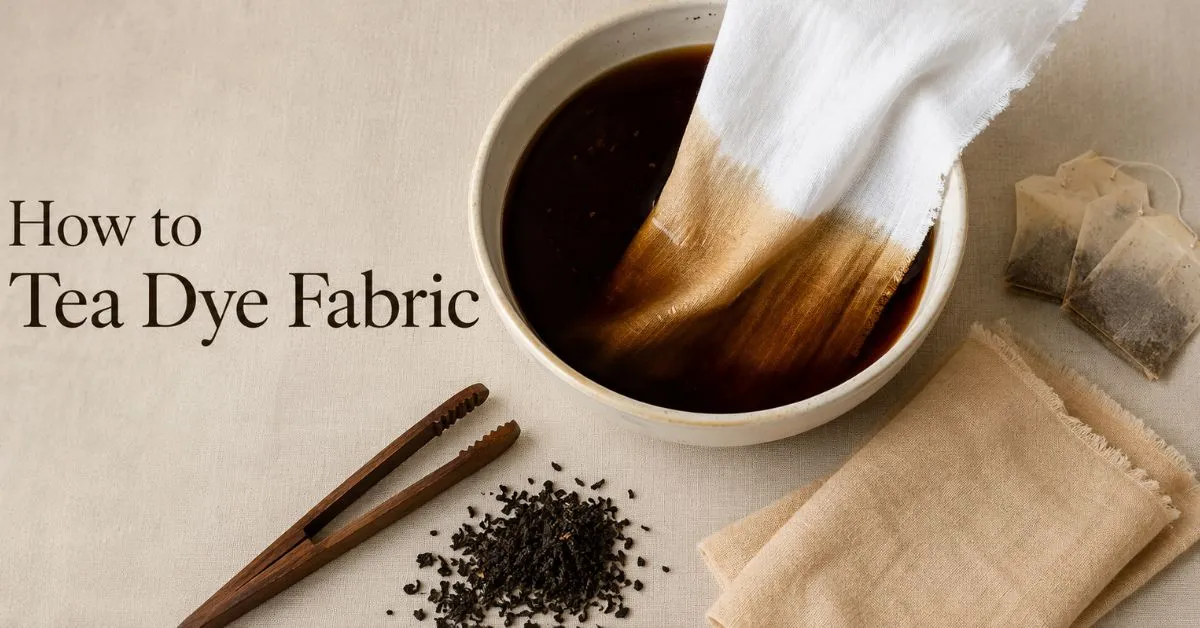
Tea dyeing is a clever way to give your white or light-colored fabric a warm and aged look with everyday black tea. The recipe works best on natural fibers like cotton, linen, and wool as well as silk because they have a better absorption rate than synthetics.
To tea dye fabric properly, wash, brew, immerse, and agitate the damp material until the color is satisfied. Let it reach the needed depth and rinse, then hang it to dry in a shaded area. Tea does not produce bright or vivid colors but instead beige, cream, tan, and warm browns.
What Is Tea Dyeing?
Tea dyeing refers to the natural staining process that utilizes the tannic acid in tea leaves to color fabric. Soaking the material in a concentrated solution allows the solution to penetrate the fibers and change the color to a warm and vintage tone.
The coloring process differs from commercial fabric dye because it cannot penetrate deep into the fibers or provide a washfast color. Instead, tea dyeing works more like a controlled stain with the following factors affecting the outcome:
- Type of tea
- Fiber content
- Concentration
- Water temperature
- Soaking time
- Fabric preparation
- Presence of finishes or coatings
It is best to use strong black tea for dyeing because it has a higher percentage of dark tannins than green, white, or herbal teas.
Which Fabrics Can Be Tea Dyed?
The following common fabrics can be tea dyed:
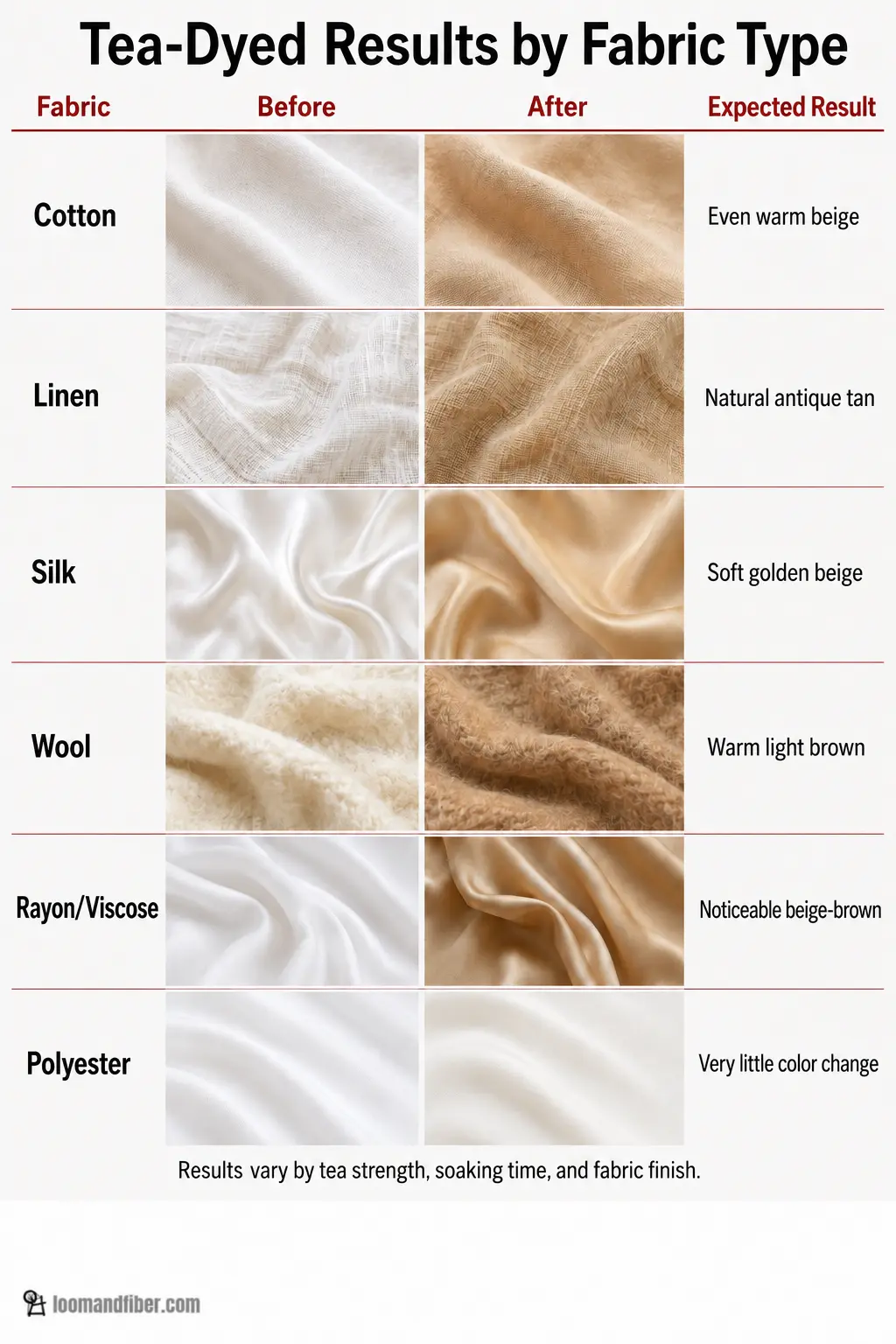

| Fabric | Expected result | Suitability |
|---|---|---|
| Cotton | Warm cream to medium tan | Excellent |
| Linen | Natural beige or aged brown | Excellent |
| Silk | Soft golden or antique shade | Very good |
| Wool | Warm tan or brown | Very good |
| Rayon or viscose | Beige to brown | Good |
| Nylon | Light, unpredictable staining | Limited |
| Polyester | Very pale or almost no change | Poor |
| Acrylic | Minimal color absorption | Poor |
Cotton-polyester blends can also be dyed, but the result will not be as consistent because polyesters have a lower absorption rate than cotton. This means that the cotton yarns will generally be darker than the polyester ones, producing a heathered effect. Always read the care label before proceeding because the dye may have little or no effect on polymer-coated textiles or those with a stain-resistant finish.
What Tea Is Best for Dyeing Fabric?
Strong black tea is the best choice for producing cream, beige, tan, and antique-brown colors. Some good options are English breakfast, Assam, Ceylon, standard black tea bags, or loose black tea leaves.
Every type of tea can produce different colors, so always try a test swatch before proceeding.
| Tea type | Likely fabric color |
|---|---|
| Black tea | Beige, tan, or warm brown |
| Green tea | Very pale yellow-green or beige |
| Rooibos | Peach, rust, or reddish tan |
| Hibiscus tea | Pink or muted red, but often fades |
| Turmeric tea | Bright yellow, but can fade unevenly |
| Herbal blends | Unpredictable, depending on ingredients |
It is best to avoid flavored teas because oils in the flavoring agents can mark the fabric or leave an unpleasant odor.
The Supplies
The following supplies are needed for tea dyeing:
- White, cream, or light-colored fabric
- Black tea bags or loose black tea leaves
- Stainless steel pot, enamelware, or heat-resistant bucket
- Enough water to allow free movement of the fabric
- Wooden spoon or stainless steel tongs
- Liquid detergent
- Rubber gloves
- Second bowl for rinsing
- White vinegar (optional, depending on the fiber)
- Towel or drying rack for air-drying
Do not use an aluminum pot or any other reactive metal because the tannins in the tea can combine with the metal and unpredictably change the color. The container also needs to be large enough to allow free movement of the fabric because crowding causes patchy, creased, and uneven dye jobs.
How to Tea Dye Fabric Successfully
The following guide is ideal for tea dyeing cotton, linen, rayon, and many other natural fiber garments.
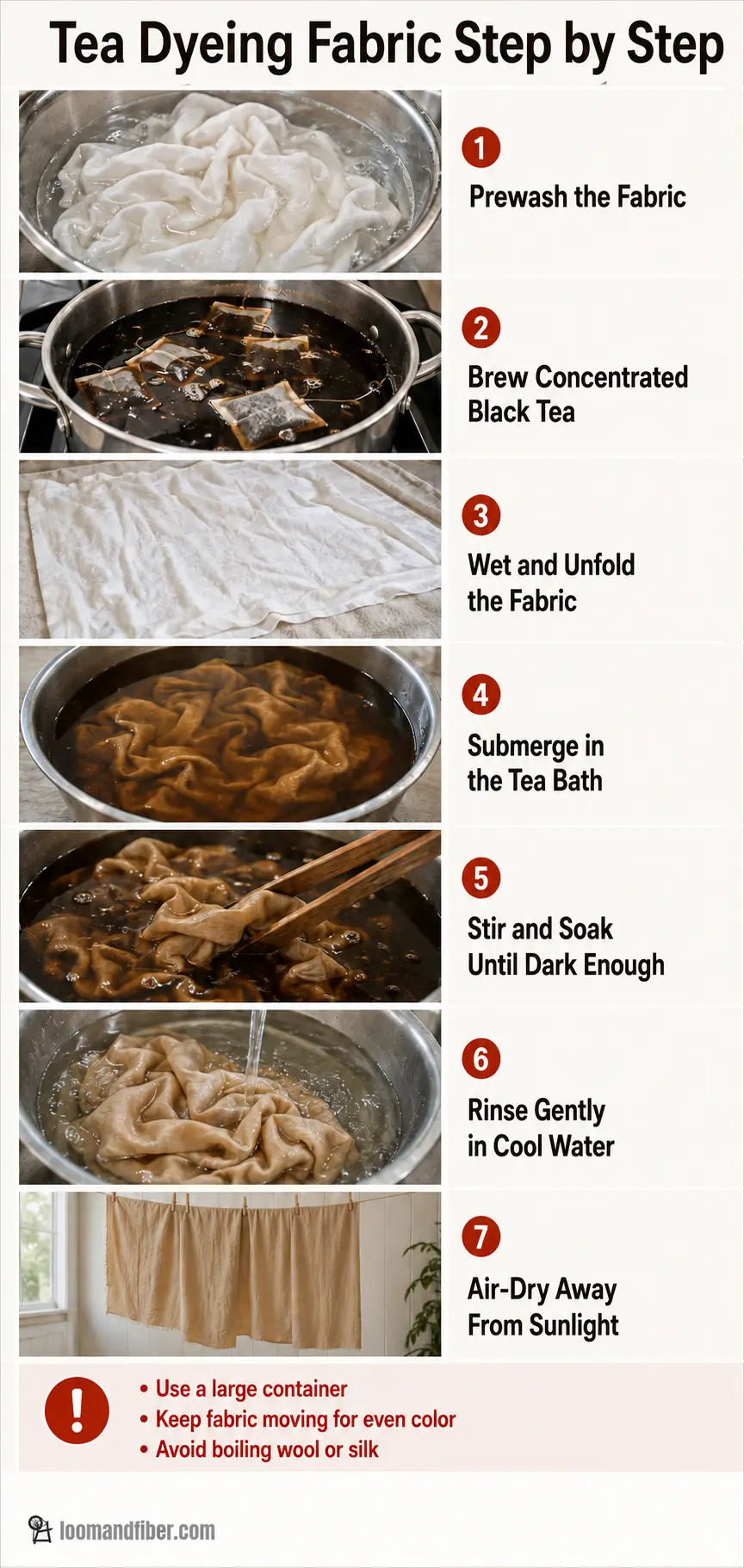
Wash the Fabric
Wash the material in a washing machine or by hand with a small amount of liquid detergent. Do not use fabric softener.
New fabric can have sizing, oil, wax, starch, or other finishing agents that can prohibit the even absorption of the tea solution. On the other hand, used fabric can have body oils, detergent residue, or stains. After rinsing, do not dry the material because wet fabric generally has a better absorption rate than dry fabric.
Prepare Enough Water
Fill the stainless steel or enamel pot with enough water to allow free movement of the fabric. As a general guideline, use:
- 4-6 tea bags per liter of water for lighter shades
- 8-10 tea bags per liter of water for medium shades
- 12-15 tea bags per liter of water for darker browns
These are only guidelines because different brands have varying levels of tannic acid, and different types of fabric have differing absorption rates. Prepare more liquid when working with large garments instead of forcing the fabric into a smaller pot.
Steep a Concentrated Tea Bath
Heat the water until it reaches a boil, then turn off the stove and add the tea bags. Steep for at least 15-30 minutes, or until the liquid reaches the desired color for the fabric. For darker shades, steep the tea bags for a longer time or allow the bags to stay in the pot as it cools.
It is important to constantly stir or shake the liquid so that the solution maintains an even consistency. Remove broken tea bags and strain the loose tea leaves before adding the fabric. Loose leaves touching the material can leave small and concentrated tea stains.
Add the Damp Fabric
Submerge the damp fabric into the tea solution with a spoon or tongs. Separate the material so that no folds or air pockets are trapped underneath. Some areas may remain lighter if the folds are too tight.
Gently agitate or move the material for the first 10-15 minutes for an even dye job. Stir or shake the fabric occasionally during the entire process.
Maintain the Right Temperature
Cotton and linen fabric can generally tolerate a warm or gently simmering tea bath, provided that the care label allows it. Hot solutions generally help the dye adhere to the fibers, but boiling water can permanently ruin certain garments.
Silk and wool require a more delicate approach, so it may be necessary to allow the solution to cool before adding the delicate fabric. Avoid wringing, twisting, or exposing the fibers to large fluctuations in temperature because it can permanently felt wool or damage delicate silks.
Soak Until the Desired Depth Is Reached
The approximate time needed to achieve various shades are as follows:
- 10-20 minutes for light creams
- 30-60 minutes for beiges and light tans
- 1-3 hours for deeper and antique shades
- Overnight for darker browns
The wet fabric will look darker when removed from the solution, but some of the dye will wash out during the rinsing process. It is best to remove the material when it is slightly darker than the intended shade.
It is also a good idea to test a small piece of fabric under the same conditions to estimate the potential outcome. Document how many tea bags, liters of water, and the temperature were used for future reference.
Rinse the Fabric
Remove the fabric from the tea solution and allow excess liquid to drip out. Rinse it in cool or lukewarm water until the runoff begins to look clear. Do not expect the water to be completely clear because excessive rinsing can remove more dye than necessary.
Do not wring delicate materials. Instead, gently press or roll the fabric in an old towel to remove excess liquid.
Dry the Fabric Correctly
Air-dry the fabric on a rack or a flat surface. Do not expose it to direct sunlight because it can lighten the final color. It is also a good idea to smooth out creases before drying because they can lead to darker lines on the fabric. Place an old towel underneath the fabric to ensure that the floor or drying rack is not stained.
Assess the final color once the fabric is totally dry. If it is too light, simply repeat the entire process with a darker solution.
Read More>> How to Print Photos on Fabric at Home?
Should Vinegar or Salt Be Added?
Many people swear by the addition of vinegar or salt because they act as excellent dye fixatives. The truth is that neither of them can change the nature of tea dyeing because the tannins in tea can adhere to natural fibers without the help of additional substances.
Cotton and linen generally do not require the addition of vinegar or other acids to help the dye adhere to the fabric. Salt might change the behavior of some dyes in water, but it does not have a long-term bonding effect on tea tannins.
A vinegar rinse might help to slightly alter the final color or remove any residue, especially on delicate fibers like silk and wool. It should not, however, be counted on to provide a colorfast solution. Mix around 1 part white vinegar with 4 parts cool water and rinse a sample piece before proceeding with the entire project. It might also be necessary to test the vinegar’s effect on the intended fabric because it can change some colors or affect special finishes.
How to Tea Dye Fabric in a Washing Machine
A washing machine can be used for large cotton or linen garments, but it is generally not as controllable as the DIY method.
- To use a washing machine for tea dyeing, brew a strong batch of tea and strain it well to remove any loose leaves or tea bags.
- Add the prewashed and damp fabric to the empty machine, then add the warm solution.
- Run a wash cycle with no detergent and stop the machine during the wash phase if possible.
- Allow the material to soak for 30-60 minutes, then run a cool rinse cycle.
- Finally, rinse the empty washing machine with detergent and a hot cycle before washing any lighter garments.
This method is best used for large pieces of fabric or garments where a few uneven patches are not easily noticeable. It is generally best to avoid this method for small garments or projects that require precise colors.
How to Make a Mottled or Vintage Effect With Tea Dye
If a vintage or mottled appearance is desired, avoid constantly agitating the fabric in the solution.
Some alternative techniques include:
- Scrunching the damp material before submerging
- Tying knots in the fabric to hold color in specific areas
- Using rubber bands to create resist patterns
- Using a shallow solution bath
- Sprinkling concentrated tea solution over specific spots
- Dipping the bottom or edges into the solution
- Leaving certain folds unopened during the process
Keep in mind that it can be difficult to achieve full control over the process. It is best to start with a milder solution because it will be possible to darken the fabric in future applications.
How to Achieve an Even Color With Tea Dye
An even color can be achieved through proper preparation and agitation.
To achieve an even color:
- Wash the fabric ahead of time
- Make sure that the prewashed fabric is completely damp before submerging
- Work in a large enough solution bath
- Prepare enough liquid to allow free movement of the fabric
- Ensure that there are no loose leaves in the solution
- Open the fabric fully in the solution bath
- Stir the fabric regularly
- Avoid overcrowding the solution
- Maintain an even temperature
- Test a sample piece before proceeding
If there are multiple pieces of fabric that need to be dyed the same color, try adding them to the same solution bath. The outcomes of separate dye baths are likely to be inconsistent.
Why Did My Tea Dye Turn Out Patchy?
Patchiness generally occurs when the tea dye solution could not penetrate the fabric evenly.
The most common causes include:
- The fabric was not prewashed
- The pot was too small
- The fabric was folded
- Dry spots of fabric were added to the solution
- The solution contained loose leaves
- The fabric was not stirred
- The fabric had a stain-resistant finish
- There were preexisting stains
- There were mixed fibers in the garment
It might be possible to fix minor patchiness by simply rewashing the fabric in an even larger (and slightly lighter) solution. A light solution combined with constant movement is generally safer than trying to mask lighter patches with a much darker one.
Is Tea Dye Permanent?
Tea dye is not permanent: it can fade while washing, rubbing, being exposed to sunlight, and to cleaning products.
Tea-dyed decorative items tend to hold their color better because they are not washed as often as clothing, towels, linens, and other frequently worn or used objects.
Tips for making tea dye last longer:
- Wash the fabric when necessary
- Use cool water
- Use a pH neutral detergent
- Use a gentle wash cycle
- Do not use chlorine bleach
- Do not use a stain remover with oxygen bleach
- Do not expose fabric to direct sunlight
- Refresh the dye every now and then
Tea dyeing is best done if one expects the fabric to eventually fade and have uneven patches.
Can You Tea Dye Printed or Colored Fabrics?
Yes, but tea dye adds a translucent warm brown color to the fabric, rather than obscuring the existing patterns.
- On printed clothing, the tea can lighten up bright white areas,
- make the image less defined,
- give modern colors an antique look,
- warm up blue tones, grey, pink, or green spots,
- and darken exposed fiber.
Dark fabric will not show any significant changes. Always test on a hidden area if the tea might make some parts of the pattern or color change more than others.
Can You Tea Dye Polyester?
Pure polyester fabric is usually too smooth to allow tea to adhere to it in sufficient quantity for a noticeable or permanent color. One might see a light beige spot on the fabric, but much of the dye can wash away.
Polyester fabric needs a disperse dye and high heat to change color permanently. Only commercial fabric dyes meant for synthetic fibers can permanently dye polyester fabric.
A cotton-polyester mix can take on a heather appearance because only the cotton can take in a meaningful amount of tea dye.
Tea Dyeing Delicate Fabrics
Silk
Use warm but not boiling tea to color silk fabric. Handle the silk gently and do not expose it to very acidic solutions for too long. Do not wring the silk, and test it first because it takes up color quickly.
Wool
Make a warm solution, and gently move the wool fabric in it. Avoid agitating the wool or exposing it to water at significantly different temperatures to prevent it from felted or shrunken. The wet fabric should be supported when lifted because it can stretch.
Vintage Fabric
Old fabric can have weak spots, old stains that repel color, and a different reaction to chemicals. Always test it on a small hidden area, and do not use boiling water to dye delicate fabrics. Such a process might require the help of a professional textile conservator for historical clothing.
Common Tea Dyeing Mistakes
Not using enough tea bags
A weak solution might result in a pale dye that will be mostly stripped off during rinsing. Always prepare a stronger solution than one would normally drink.
Using unwashed fabric
One should always wash the fabric before tea dyeing to remove sizing, fabric-softener finishes, oil, and other substances.
Using a small container
Small containers cause folded fabric to wrinkle more easily because the dye solution cannot freely flow around it.
Wanting to achieve a permanent dark brown color
Tea is not a strong dye, and the tea-dyed fabric will gradually fade. One should use tea to achieve pale colors that match the desired tone of a finished piece.
Boiling delicate fibers
Too high of a temperature can shrink wool, ruin silk, distort garments, and encourage creases to set in the fabric.
Not testing a sample
The same solution can appear different on different types of fabric, such as cotton, linen, or silk. A sample always shows how the solution interacts with the material before investing time and effort into an entire project.
Conclusion-
Learning how to tea dye fabric is easy, but achieving the desired effect depends on the type of fabric and the care during the process. Natural fibers such as cotton and linen are a safer option for achieving consistent results. Prewashing, using a large enough vessel, preparing a strong solution of black tea, and regularly flowing the fabric in warm water are essential for successfully tea dyeing fabric.
Tea dyeing is best used when one wants to achieve a soft cream, beige, tan, or brown color and is not worried about the faded effect that it has on the fabric. One should always test a piece of the same material before using an expensive or precious garment, use warm water for delicate fibers, and use a commercial textile dye for a permanent color.
Read More>> How to Waterproof Fabric at Home?
FAQs
Use 4–6 black tea bags per liter of water to achieve a pale color and 8–15 tea bags per liter to achieve a medium or dark shade. Heavy or thick fabric or a large project might require more tea leaves.
Depending on the desired shade, the cloth may need to soak for 10 minutes to achieve a pale cream color or several hours to achieve a darker tan. Always test the fabric, and remember that the final result will be lighter than the desired shade.
It is not necessary to boil fabric when tea dyeing it. One can use hot but not boiling water for cotton and linen. However, wool and silk should be dyed in warm water to avoid damaging them.
Yes, but the resulting color will gradually fade. Tea contains tannins that adhere to the fabric without a mordant, but the dye will not be permanent.
Some of the color will come out when the fabric is washed, but the remaining dye will gradually fade. Using cold water and a mild detergent on a gentle cycle helps retain the color.
Yes, but the final color will depend on the type of coffee and fabric. Coffee can create grey-brown or dark brown colors. One should also remember that washing will remove some of the color. Tea generally creates warmer tones such as beige and antique yellow.
It can cover up some light yellow spots on fabric, but it will not effectively dye dark spots. Stains on the fabric also absorb more dye and thus, appear darker.